定制開發如何革新建造業考勤與薪酬系統:從C#全棧開發到智能HRMS的轉型之路
面對傳統考勤與薪酬系統的局限,香港企業如何透過定制軟件開發、系統整合與持續營運,打造符合建造業議會合規要求的智能管理平台,實現人力資源管理的數字化轉型。
考勤与薪酬管理系统
考勤、薪酬、门禁、多功能集成系统,助力企业降本增效! Details
整合自动化考勤与薪酬计算, 高度安全的流程化,保障薪酬计算安全可控, 请假排班,多分支,连锁,分销, 多账目,功能全面。
Custom Development: The Key to Addressing Current Market Limitations in Attendance and Payroll Systems
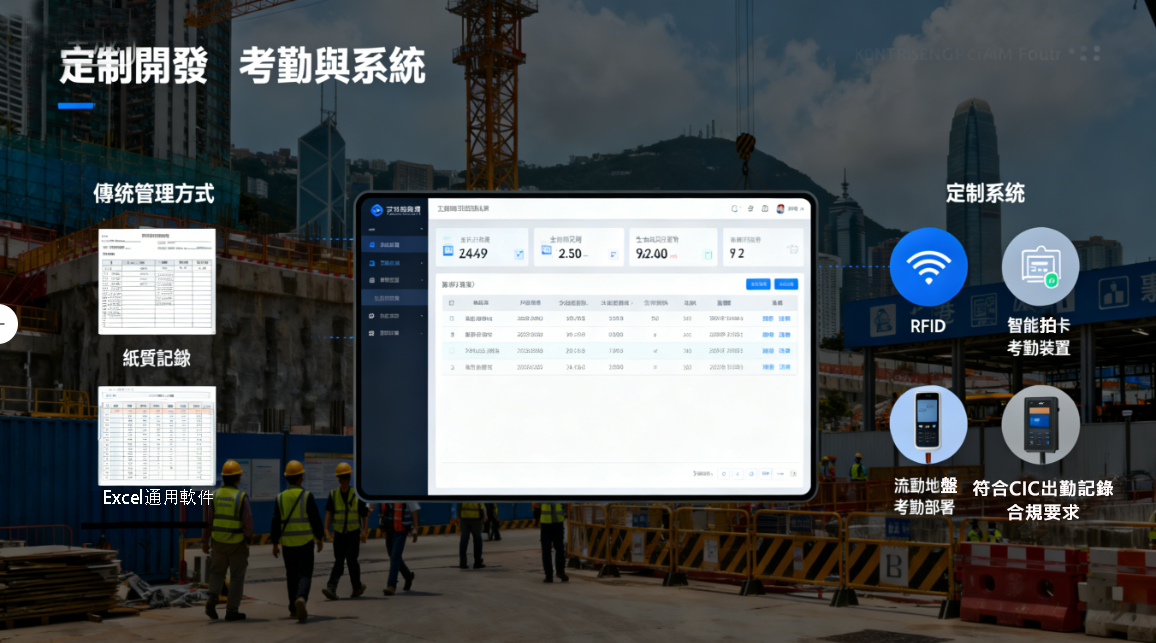
In today's rapidly evolving construction industry, traditional methods of attendance and payroll management face unprecedented challenges. Many enterprises still rely on paper-based records, scattered Excel sheets, or generic software with limited functionality, leading to inaccurate data, high compliance risks, and low management efficiency. Particularly in Hong Kong's construction sector, strict adherence to regulations such as the Construction Industry Council (CIC)'s dual register management and worker registration attendance requirements makes off-the-shelf systems often inadequate.
Custom software development emerges as the critical solution to these pain points. Through professional system analysis and design, businesses can build solutions that perfectly align with their operational workflows. For instance, for construction site attendance systems, custom development can integrate technologies like RFID and biometrics to enable smart card reading, mobile site attendance devices, and automated processing of attendance data, ensuring compliance with CIC attendance record regulations.
How Custom Development Operates and Evolves Continuously
Custom development is not merely a one-time project delivery but an ongoing optimization process. Reputable IT solution providers, such as software development companies in Hong Kong, adopt agile methodologies combined with CI/CD pipeline setup to ensure systems can iterate rapidly and adapt to changes.
Take a construction payroll calculation system as an example. The initial version might focus on basic attendance data collection and automated payroll computation. As the business grows, the enterprise may need to add features like subcontractor attendance monitoring, multi-site attendance integration, or violation alert systems. Through continuous development and system integration, the custom system can expand flexibly, avoiding compatibility issues often associated with legacy system upgrades.
Full-stack development technologies, such as combining .NET Core backend with Angular frontend, further support cross-platform application development, allowing managers to monitor attendance in real-time via web applications or mobile apps, whether in the office or on-site.
Benefits of Custom Development for Attendance and Payroll System Operations
- Enhanced Compliance and Reduced Disputes: Custom systems can embed CIC compliance logic, automatically checking worker registration status and attendance record compliance, and generating compliance reports. This not only reduces human errors but also minimizes labor disputes arising from inaccurate payroll calculations.
- Paperless Operations and Efficiency Gains: Through electronic reading devices and intelligent site management platforms, enterprises can completely eliminate paper-based clocking, achieving automated attendance data collection. Automated payroll report generation further liberates finance departments from tedious manual calculations, significantly improving site management efficiency.
- Data-Driven Decision Support: Custom systems typically feature robust database design and optimization, capable of storing historical attendance and payroll data. Combined with API development and integration, this data can seamlessly connect with other enterprise systems (e.g., ERP systems, CRM customer relationship management systems), providing comprehensive operational insights to management.
Continuous Optimization of Human Resource Management and Reporting Statistics
Under a custom development framework, a Human Resource Management System (HRMS) transforms from a static tool into an intelligent platform that evolves with business growth. For example, real-time monitoring concepts commonly used in smart building management systems or security system development can be applied to HRMS for real-time attendance monitoring and alerts.
Through continuous system operation, HR departments can consistently gather feedback, identify new requirements—such as optimizing site scheduling management systems or supporting payroll structure adjustments. The flexibility of custom development ensures these needs can be implemented swiftly, addressing the enterprise's evolving demands.
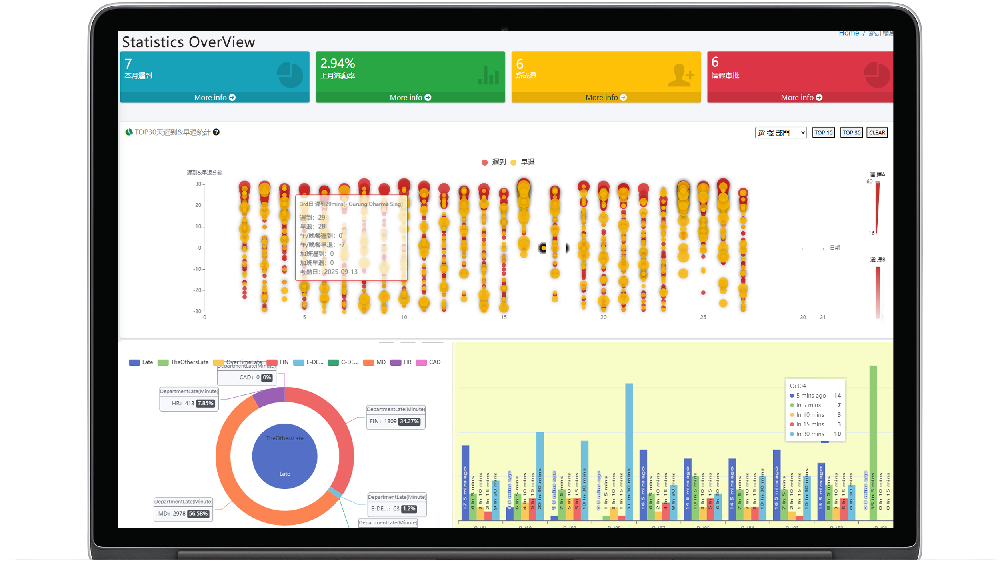
For reporting and statistics, custom systems can generate multi-dimensional charts and reports based on management needs. Examples include:
- Attendance Analysis Reports: Display attendance rates and tardiness trends by site and trade, aiding in schedule optimization.
- Payroll Cost Reports: Statistic payroll expenditures by project, subcontractor, and time period, supporting financial system development and budget control.
- Compliance Monitoring Dashboards: Centralize display of CIC compliance status and worker registration details, facilitating construction compliance regulatory platform development.
These reports are not only viewable via HTML web pages but also accessible on mobile devices through cloud system development, enabling management decisions anytime, anywhere.
Technology Stack and Future Prospects
Modern custom development widely employs technologies like C# development, .NET Core, and Angular web development to ensure system stability, security, and scalability. Cross-platform development capabilities further allow systems to be deployed on Windows, Linux, and even cloud environments, adapting to diverse enterprise IT infrastructures.
Looking ahead, AI application development and IoT system development will further empower attendance and payroll systems. For instance, AI can analyze attendance patterns to predict manpower needs, while IoT sensors can automatically log workers' time in hazardous zones, integrating into payroll calculations. FFmpeg video processing technology could even be applied to site surveillance video analysis, assisting attendance verification.
For Hong Kong SMEs, opting for local software outsourcing development services not only provides solutions tailored to local regulations but also offers ongoing technical consultancy services, ensuring systems remain up-to-date.
Conclusion
Custom development is not a luxury but a necessity for highly regulated industries like construction. From site attendance systems to human resource management, a well-designed, continuously optimized custom system can transform compliance burdens into management advantages, driving enterprises toward an intelligent, efficient, and paperless future. Whether in smart security system development or enterprise software development, the core lies in using technology to solve real business challenges—and custom development is the optimal path to achieve this goal.























精选短评
尚无短评,欢迎留下第一则。
写短评
支持粗体、列表;勿贴外部脚本或图片
0 / 2000
提交后需审核才会公开显示