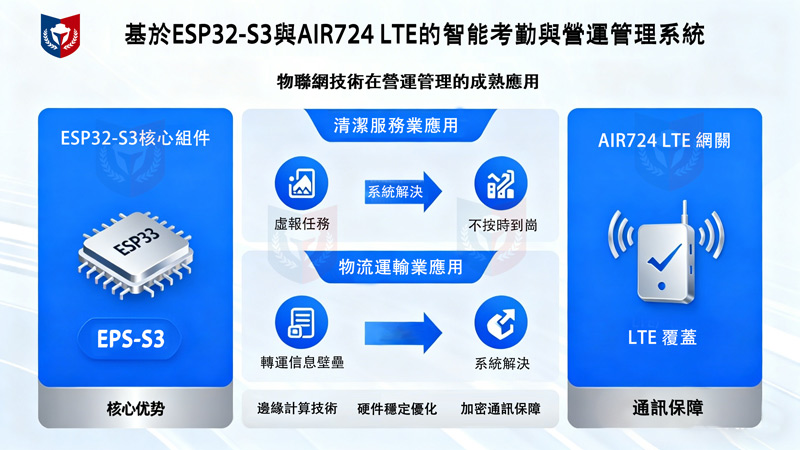
Intelligent attendance system based on ESP32-S3 and Air724 LTE edge computing
Edge computing is reshaping modern operational governance and providing solutions for government compliance.
Time & Payroll Suite
Attendance, Payroll and Access Control Solution for Cost Reduction and Productivity Gains Details
All‑in‑one automated timekeeping and payroll system with robust, secure processes to guarantee payroll integrity. Includes leave management, shift rostering, multi‑site and chain support, multi‑ledger accounting, and comprehensive modules.
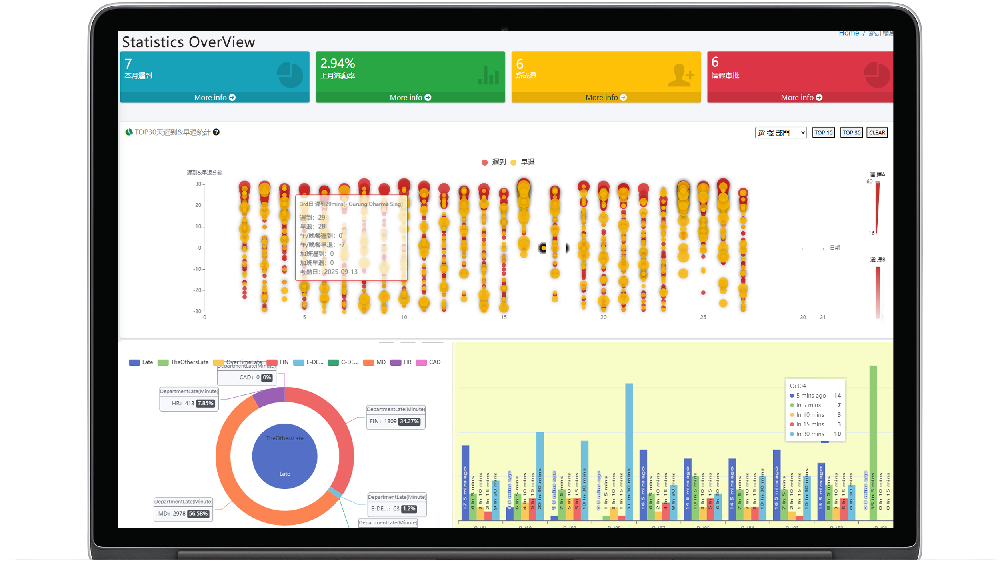
Intelligent Attendance and Compliance Monitoring Solution Based on ESP32-S3 and LTE Edge Computing System
Introduction: Edge Computing Reshapes Modern Operations Monitoring
In the development of IoT technology, edge computing has moved from proof-of-concept to large-scale commercial applications. Especially in labor-intensive service industries and logistics transportation, traditional operations monitoring methods are facing unprecedented challenges. Issues such as false reporting of tasks in the cleaning service industry and collusion and fraud in the logistics transportation industry not only cause direct economic losses to enterprises but may also trigger legal disputes and brand reputation crises. This article will detail how to use the ESP32-S3-DEV-KIT-N16R8-M development board in conjunction with the Air724 LTE edge computing gateway to build a stable, efficient, and compliant intelligent attendance and work verification system, addressing the aforementioned industry pain points from a technical perspective.

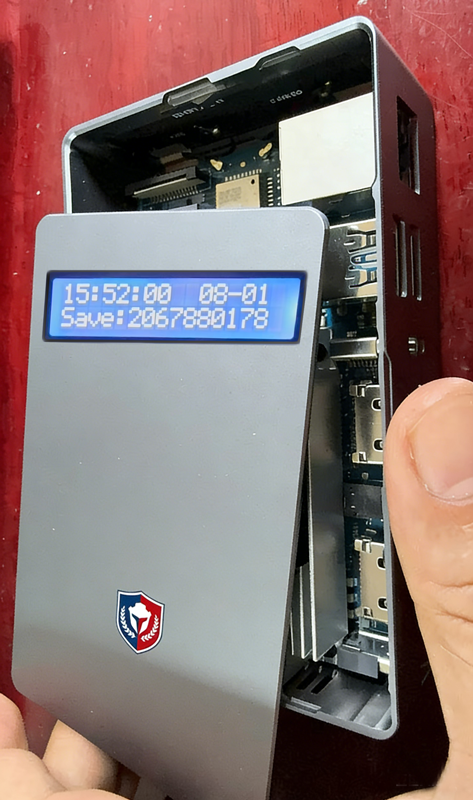
Chapter 1: ESP32-S3 Technical Architecture and Performance Advantages
1.1 Hardware Architecture Design Philosophy
The ESP32-S3-WROOM-1 module adopts Espressif Systems' most advanced IoT chip architecture, specifically designed for high-reliability edge computing scenarios. Its core features are:
Dual-core processor architecture:
- Equipped with an Xtensa® 32-bit LX7 dual-core processor with a clock speed of up to 240 MHz
- Core division of labor: One core focuses on sensor data acquisition and real-time processing, while the other core handles communication protocols and network transmission.
- Efficient data exchange mechanism between the two cores ensures system response latency of less than 50ms.
Optimized memory configuration:
- Built-in 512KB SRAM to meet the memory requirements of complex algorithms.
- External 16MB Flash storage space to accommodate various AI models and historical data.
- Independent RTC memory for data retention in low-power states.
1.2 RF performance and communication stability
Enhanced RF circuit design:
- Four-layer PCB design with a dedicated RF ground plane.
- Integrated π-type matching circuit for optimized antenna impedance matching.
- Receiver sensitivity reaches -98 dBm (typical value), maintaining stable connectivity even in complex environments
Multiple Communication Interface Support:
- Supports 802.11 b/g/n Wi-Fi protocol, 2.4 GHz band
- Bluetooth 5.0/5.1 LE protocol, supporting long-range transmission mode
- Rich peripheral interfaces: SPI, I2C, I2S, UART, PWM, etc.
1.3 Power Management and System Stability
Advanced Power Management Unit:
- Operating voltage range: 3.0V - 3.6V, adaptable to various power supply environments
- Multiple power modes: Active mode, modem sleep mode, light sleep mode, deep sleep mode
- Ultra-low power coprocessor (ULP): RISC-V core, power consumption only 10µA, can perform simple monitoring tasks when the main core is in sleep mode
Temperature Stability Guaranteed:
- Operating temperature range: -40°C to 85°C
- Built-in temperature sensor enables dynamic temperature compensation
- Thermal Design Power (TDP) control prevents overheating and frequency throttling
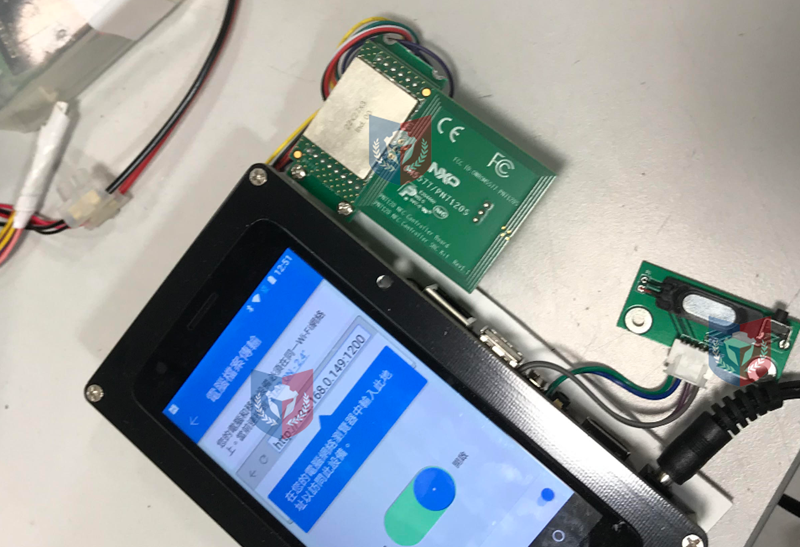
Application based on ESP, stable performance, physical security technology
Chapter 2: Edge Computing System Architecture Design
2.1 System Overall Architecture
This system adopts a layered edge computing architecture, including the following four layers:
Terminal Perception Layer:
- ESP32-S3 development board as the main controller
- NFC M4255 RF chip module, supporting ISO 14443 A/B protocol
- 2-megapixel camera lens module, supporting face detection and recognition
- GPS/BeiDou dual-mode positioning module
- Ambient light sensor and motion sensor
Edge Computing Layer:
- Local AI inference engine: executes a lightweight face recognition model
- Data Preprocessing Module: Filters, validates, and compresses sensor data
- Rule Engine: Executes predefined business rules and validation logic
Network Transport Layer:
- Air724 LTE CAT4 module, supports all network types
- Dual SIM card backup design, automatically switches operators
- QoS guarantee mechanism, prioritizes transmission of critical data
Cloud Management Layer:
- Data analysis and report generation
- Remote device management and firmware updates
- Multi-tenant architecture support
2.2 Data Flow Design
Real-time Data Flow:
Batch Data Flow:
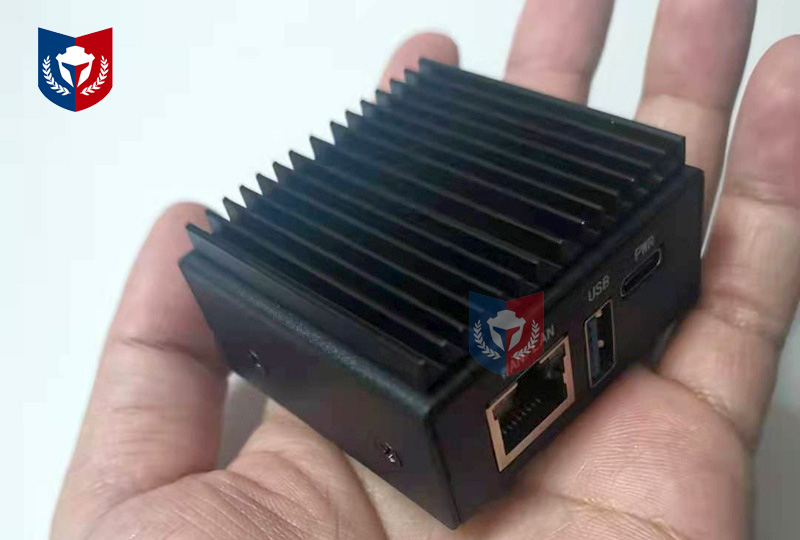
AI-Powered Alerts Based on IoT Technology
Chapter 3: Attendance Management Solution for the Cleaning Service Industry
3.1 In-Depth Analysis of Pain Points in Scenarios
The core challenges faced by the cleaning service industry include:
- Time Fraud: Employees arriving late, leaving early, or shortening service hours
- Location Fraud: Falsely reporting attendance without actually arriving at the service location
- Task Fraud: Marking unfinished cleaning tasks as completed
- Lack of Evidence: Lack of objective evidence to support claims in case of disputes
3.2 Multi-Factor Validation Mechanism
Spatiotemporal Consistency Validation:
- GPS positioning and service location geofence matching
- Arrival time and scheduled time window verification
- Dwell time and task requirement duration comparison
Biometric Validation:
- Face liveness detection to prevent photo fraud
- Random face recognition during working hours
- Comparison of facial features with employee registration information
Task Completion Validation:
- NFC check-in point deployment in key areas
- Task step completion sequence verification
- Automatic collection of before-and-after cleaning photos
3.3 Anomaly Detection and Early Warning
Behavioral Pattern Analysis:
- Establish a baseline for employees' normal work patterns
- Real-time detection of behaviors deviating from normal patterns
- Multi-dimensional anomaly scoring system
Intelligent Early Warning Mechanism:
- Instant anomaly notification to management personnel
- Tiered early warning: Reminder, Warning, Critical Warning
- Predictive analysis: Identifying potential risk patterns
Chapter 4: Logistics and Transportation Industry Transfer Supervision Solution
4.1 Challenges in Transportation and Transfer Scenarios
Special characteristics of the logistics and transportation industry's transfer process:
- Geographical dispersion: Multiple transfer stations are widely distributed
- Time uncertainty: Arrival time is affected by traffic conditions
- Personnel mobility: Drivers and transfer station personnel work together
- Cargo diversity: Different goods have different handling requirements
4.2 Person-Cargo Association Verification System
Dual Authentication Mechanism:
- Driver authentication: NFC work card + facial recognition
- Transfer station personnel verification: NFC work card + facial recognition
- Verification of Timestamp Correlation Check
Cargo Association Verification:
- Electronic cargo manifest
- Photographic evidence of cargo status
- Electronic signature for cargo handover
Time and Geographic Association Verification:
- GPS location verification upon arrival at transfer station
- Comparison of arrival time with scheduled time
- Analysis of the match between dwell time and transfer operation duration
4.3 Anti-Collusion Design Principles
Independent Verification Channel:
- Separation of driver verification and transfer station personnel verification
- Independent upload of verification data, background association comparison
- Random cross-verification mechanism
Behavioral Pattern Anti-Tampering:
- Unalterable device operation logs
- Multi-node time synchronization verification
- Abnormal pattern association analysis
Chapter 5: Advantages of Air724 LTE Edge Computing Gateway Technology
5.1 Mobile Communication Performance
High-Speed Transmission Capability:
- LTE CAT4, downlink speed up to 150Mbps, uplink speed up to 50Mbps
- Supports carrier aggregation technology to improve spectrum utilization
Smart antenna selection to optimize signal quality
Network stability assurance:**
Supports full network compatibility, automatically selecting the best operator
Real-time signal strength monitoring and switching
Automatic reconnection mechanism for network disconnections
Security design:**
Hardware encryption engine, supporting algorithms such as AES, RSA, and SHA
Secure boot and secure firmware updates
End-to-end encryption of communication data
5.2 Edge computing capabilities**
Local computing resources:**
High-performance processor to meet complex computing needs
Large-capacity memory, supporting multi-task parallelism
Local storage buffer to cope with network interruptions
Edge intelligent algorithms:**
Lightweight AI model inference
Data preprocessing and filtering
Rule engine and decision making
Chapter Six: System Stability and Reliability Design**
6.1 Hardware reliability measures
Environmental adaptability design:**
Industrial-grade component selection, wide operating temperature range
- Dustproof and waterproof design (IP65 rating)
- Electromagnetic interference resistant design, EMC tested
Power supply stability guarantee:
- Wide voltage input design (9-36V DC)
- Multi-level power protection: overvoltage, overcurrent, reverse connection protection
- Backup power design, supports data retention during power outages
6.2 Software stability measures
Fault tolerance mechanism design:
- Critical process monitoring and automatic restart
- Data transmission retry and breakpoint resumption
- Local caching and data recovery mechanism
System monitoring and maintenance:
- Remote status monitoring and alarms
- Automatic log collection and analysis
- Remote diagnostics and troubleshooting
6.3 Network reliability strategy
Multiple connection backups:
- Dual network design with LTE as primary and Wi-Fi as backup
- Dynamic network quality assessment and switching
- Data transmission priority scheduling
Offline operation capability:
- Local data storage during network interruption
- Offline rule enforcement capability
- Automatic synchronization after network recovery
Chapter 7: Compliance and Privacy Protection Design
7.1 Data Privacy Protection
Minimum Necessity Principle:
- Only collect data necessary for business operations
- Anonymize sensitive data
- Data storage time limits
Encryption and Access Control:
- Dual encryption at the transport and storage layers
- Role-based access control (RBAC)
- Complete recording and auditing of operation logs
7.2 Labor Law Compliance
Work Hour Management:
- Comply with local work hour regulations
- Mandatory implementation of rest periods
- Automatic recording and alerting of overtime
Employee Rights Protection:
- Protection of personal privacy data
- Appeals and dispute resolution mechanisms
- Data transparency and right to know
7.3 Industry Standard Compliance
Technical Standard Compliance:
- Wireless communication standard compliance
- Data format standardization
- Interface openness and compatibility
Certification and Testing:
- Obtain relevant industry certifications
- Third-party security testing
- Continuous compliance assessment
Chapter 8: Implementation, Deployment, and Management
8.1 Deployment Strategy
Phase-based Deployment:
- Phase 1: Pilot Deployment at Key Sites
- Phase 2: Expanding Deployment Scope
- Phase 3: Full-scale Promotion and Optimization
Equipment Installation Guidance:
- Installation Location Selection and Environmental Assessment
- Power and Network Cabling Standards
- Equipment Configuration and Initialization Process
8.2 Training and Support
Management Personnel Training:
- System Operation and Management Training
- Data Analysis and Report Interpretation
- Anomaly Handling Process Training
User Training:
- Equipment Usage Guidelines
- Common Problem Handling
- Introduction to Feedback Mechanism
8.3 Maintenance and Optimization
Regular Maintenance Plan:
- Equipment Status Check and Cleaning
- Software Updates and Security Patches
- Performance Evaluation and Optimization
Continuous Improvement Mechanism:
- User Feedback Collection and Analysis
- Continuous System Function Iteration
- New Technology Integration and Upgrading
Chapter 9: Benefit Analysis and Return on Investment
9.1 Direct Economic Benefits
Cost Savings:
- Reduced manual verification costs
- Reduced direct losses from fraud
- Optimized human resource allocation
Efficiency Improvement:
- Automated data collection and processing
- Real-time monitoring and rapid response
- Improved data quality for decision support
9.2 Indirect Benefits
Risk Control:
- Reduced compliance risks
- Reduced legal disputes
- Optimized insurance costs
Brand Value:
- Improved service quality
- Enhanced customer trust
- Increased market competitiveness
9.3 Return on Investment Analysis
Investment Costs:
- Hardware costs
- Software development and deployment costs
- Training and maintenance costs
Payback Period:
- Typical case study payback period analysis
- Long-term operating cost savings
- Potential value of risk avoidance
Chapter 10: Future Development and Technology Outlook
10.1 Technological Development Trends
Enhanced AI Capabilities:
- More accurate facial recognition algorithms
- Deep learning analysis of behavioral patterns
- Predictive maintenance and management
Communication Technology Upgrades:
- 5G RedCap technology integration
- Satellite communication backup
- Low-power wide-area network (LPWAN) technology applications
10.2 Application Scenarios Expansion
Cross-Industry Applications:
- Construction site personnel management
- Field service quality monitoring
- Public facility maintenance and management
Functional Expansion:
- Environmental quality monitoring
- Equipment status monitoring- Energy Management Optimization
10.3 Ecosystem Construction
Platform Openness:
- Open and Standardized API Interfaces
- Third-Party Application Integration
- Ecosystem Partner Development
Community and Support:
- Developer Community Building
- Technical Documentation and Training Resources
- Continuous Technical Support Services
Conclusion
The intelligent attendance and compliance monitoring system based on the ESP32-S3-DEV-KIT-N16R8-M and Air724 LTE edge computing gateway represents a mature application of IoT technology in the field of operations management. The system fully utilizes the low power consumption and high performance characteristics of the ESP32-S3, combined with the wide coverage of LTE mobile communication, to build a stable, reliable, and intelligent monitoring solution.
For the cleaning service industry, the system effectively solves management problems such as false reporting of tasks and late arrivals; for the logistics and transportation industry, the system breaks down information barriers in the transfer process, preventing collusion and fraud. More importantly, while improving management efficiency, the system fully considers compliance and privacy protection requirements, achieving a balance between corporate interests and employee rights.
With the continuous maturation of edge computing technology and the ongoing optimization of artificial intelligence algorithms, such systems will play a vital role in more industries and scenarios, driving the digital transformation of traditional industries and creating greater economic and social value.
--- The technical solutions described in this article are based on publicly available technical materials and general design principles. Specific implementation details need to be customized according to actual business needs. The system design fully considers data security and privacy protection and complies with relevant laws and regulations.
































Featured comments
No comments yet. Be the first.
Leave a comment
Bold and lists OK; no external scripts or images
0 / 2000
Comments appear after moderation