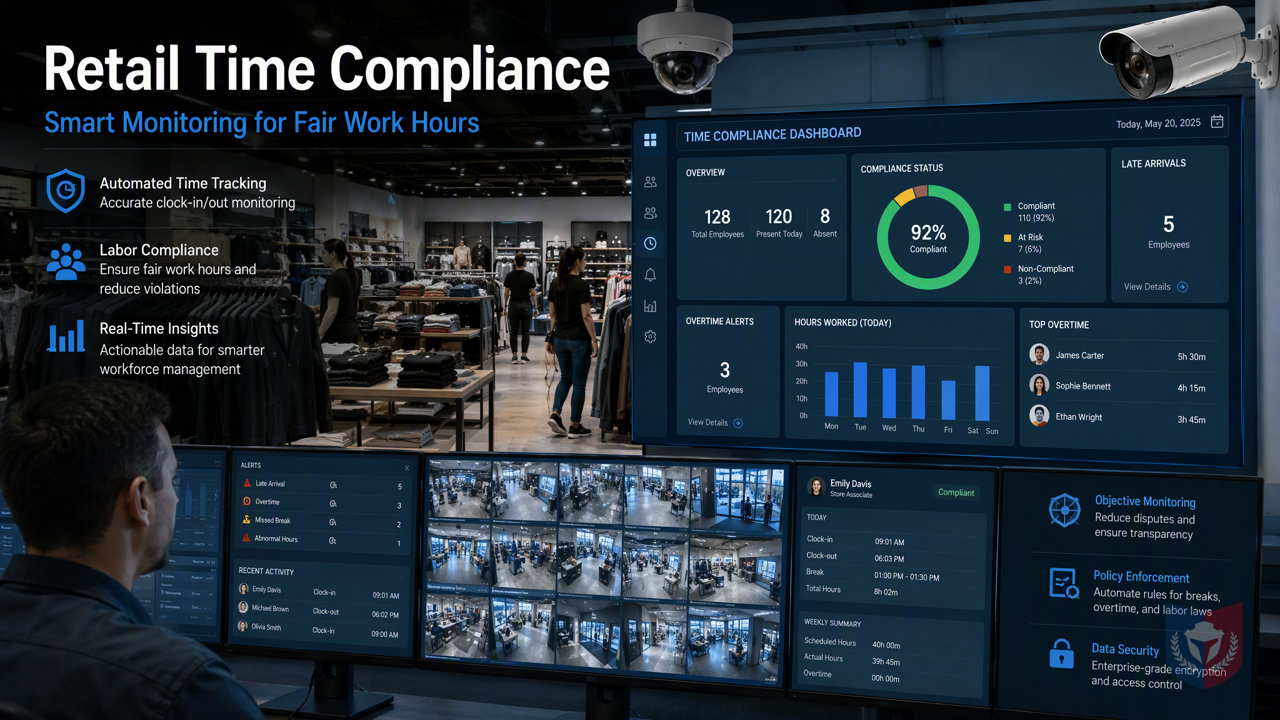
零售業工時爭議升溫:智能監控系統如何成為合規管理好幫手
面對勞資雙方對工時記錄的爭議,零售店鋪如何藉助智能監控系統客觀記錄工時,降低法律風險與管理成本?本文深入探討成因、選購要點與應用場景。
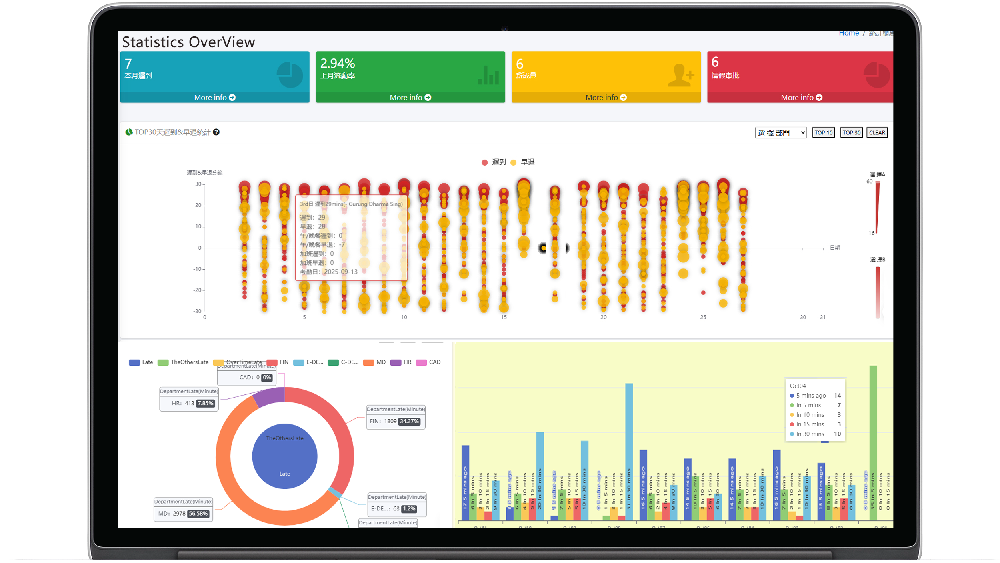
考勤与薪酬管理系统
考勤、薪酬、门禁、多功能集成系统,助力企业降本增效! Details
整合自动化考勤与薪酬计算, 高度安全的流程化,保障薪酬计算安全可控, 请假排班,多分支,连锁,分销, 多账目,功能全面。
Rising Wage-Hour Disputes in Retail: How Smart Surveillance Helps Objectively Document Working Hours
In recent years, wage-hour disputes in the retail industry have been on the rise, with employers and employees often at odds over the accuracy of time records. This has become a headache for many store managers and HR professionals. This article explores how smart surveillance systems can assist in time management, reduce disputes, and provides selection tips and practical application scenarios to help you lower management costs and legal risks.
Common Causes of Wage-Hour Disputes
Retail scheduling is flexible and manpower deployment is frequent. Time records often rely on manual clock-ins or paper sign-ins, which are prone to errors. Common disputes include:
- Manual recording errors: Employees may forget to clock in, proxy clock-ins, or managers may make calculation mistakes.
- Overtime disputes: Different perceptions of when overtime starts and ends, such as whether staying after hours to handle store tasks counts as overtime.
- Rest break disputes: Under shift systems, whether rest breaks are counted as working hours often leads to conflicts.
These disputes not only consume management time but may also lead to labor-management confrontation and even legal action.
How Smart Surveillance Systems Provide Objective Evidence
Smart surveillance systems are not just for theft prevention; they can also be a tool for time management. Through in-store cameras and intelligent analysis, the system can provide objective entry/exit records and an in-store activity timeline as supporting evidence. For example:
- Entry/exit records: Accurately record employee clock-in and clock-out times, reducing proxy clock-ins.
- Activity timeline: Combine footage with time stamps to reconstruct in-store activities and help determine overtime facts.
- Remote access: Managers can view live and historical footage anytime via mobile or computer, facilitating time verification.
These features not only improve management efficiency but also provide strong evidence in disputes, reducing legal risks.
Practical Tips for Choosing a Smart Surveillance System
When selecting a smart surveillance system for retail stores, consider the following:
- Video storage days: Choose sufficient storage days based on store needs to ensure historical records are traceable.
- Search convenience: The system should support quick searches, such as by date, time, or event, to save retrieval time.
- Remote access: Support multi-device remote access, allowing managers to monitor the store anytime.
- Scalability: As the store grows, the system should easily expand camera count and storage capacity.
- User-friendly interface: Intuitive operation to reduce employee learning costs.
Practical Application Scenarios
Shift Verification
Store managers can quickly verify actual attendance against schedules using entry/exit records, identifying anomalies promptly.
Incident Reconstruction
When labor disputes arise, managers can retrieve footage and timelines from specific dates to reconstruct events, serving as strong evidence for mediation or legal proceedings.
Compliance Management
The objective data provided by the system helps businesses comply with labor regulations and avoid penalties for inaccurate time records.
Conclusion
Wage-hour disputes in retail not only affect labor relations but may also bring legal risks and management costs. Smart surveillance systems, through objective recording and convenient retrieval, become a compliance ally. When purchasing, consider storage days, search convenience, and remote functions to meet your store's actual needs. Evaluate your time management process today and introduce a smart surveillance system to create a more transparent and efficient work environment for your store.





























精选短评
尚无短评,欢迎留下第一则。
写短评
支持粗体、列表;勿贴外部脚本或图片
0 / 2000
提交后需审核才会公开显示