AI-Driven Attendance and Payroll Systems: Intelligent Solutions for Enhanced Architecture Security and Optimized User Experience
With the rapid advancement of AI technologies like GPT-5.2, professional work is undergoing unprecedented transformation. This article explores how attendance and payroll systems leverage the latest technologies to strengthen architecture security, optimize user experience, and provide more reliable solutions for smart buildings and smart homes.
Time & Payroll Suite
Attendance, Payroll and Access Control Solution for Cost Reduction and Productivity Gains Details
All‑in‑one automated timekeeping and payroll system with robust, secure processes to guarantee payroll integrity. Includes leave management, shift rostering, multi‑site and chain support, multi‑ledger accounting, and comprehensive modules.
Introduction: How AI Technology is Reshaping Enterprise Human Resource Management
In the current wave of digital transformation, enterprises are increasingly demanding efficient, secure, and user-friendly management systems. The rapid advancement of AI technology has brought revolutionary changes to traditional attendance and payroll systems. This article delves into how AI-driven attendance and payroll systems, by enhancing architecture security and optimizing user experience, have become core intelligent solutions for businesses.
Application of AI Technology in Attendance Systems
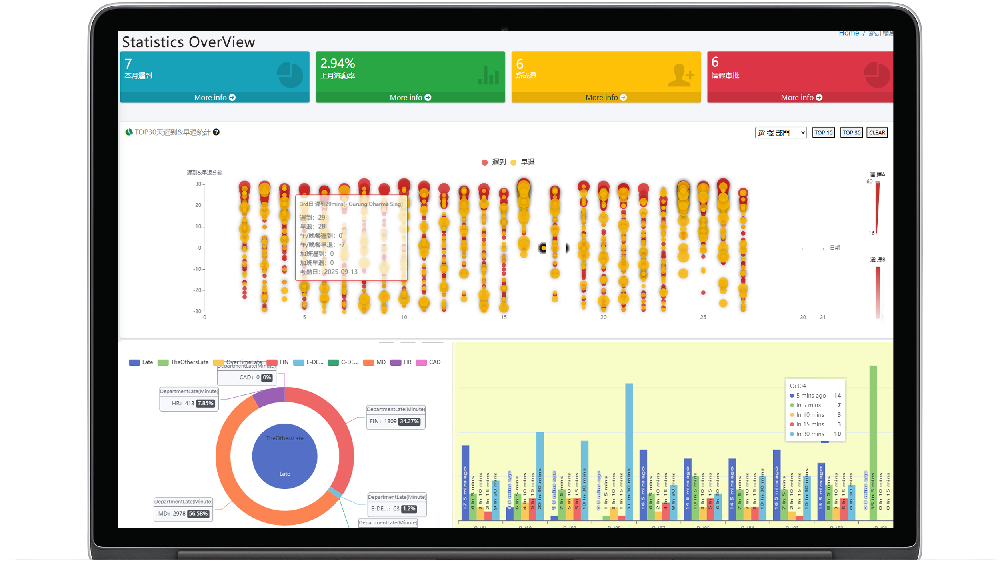
AI technology, through machine learning and deep learning algorithms, can automatically identify abnormal patterns in employee attendance data. For instance, the system can monitor clock-in records in real-time, detecting false punches or unusual time periods, thereby improving the accuracy and efficiency of attendance management. Additionally, AI can predict employee attendance trends based on historical data, helping enterprises plan human resources in advance.
Intelligent Recognition and Alert Mechanisms
By integrating biometric technologies such as facial recognition and fingerprint recognition, AI-driven attendance systems ensure accurate identity verification, preventing fraudulent behaviors like proxy clock-ins. Simultaneously, the system can set up automatic alert mechanisms, notifying managers immediately upon detecting abnormal attendance patterns, enabling timely intervention.
Data Analysis and Optimization Suggestions
AI technology can perform in-depth analysis of vast amounts of attendance data, identifying key factors affecting employee attendance rates, such as work environment and scheduling systems. Based on these analytical results, the system can provide optimization suggestions to enterprises, helping improve employee satisfaction and work efficiency.
Application of AI Technology in Payroll Systems
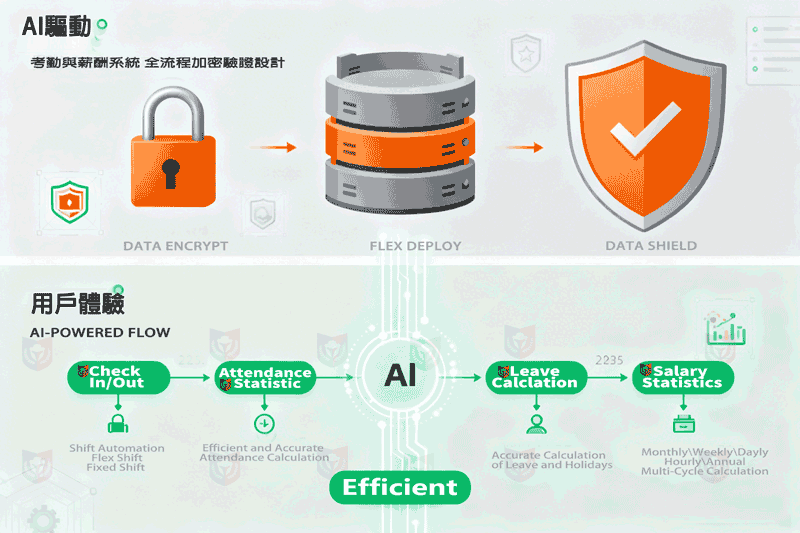
Payroll management is a critical aspect of enterprise human resource management, and the introduction of AI technology makes salary calculations more precise and efficient. By automating payroll data processing, AI systems reduce human errors, ensuring the accuracy and timeliness of salary disbursements.
Automated Payroll Calculation and Compliance Checks
AI-driven payroll systems can automatically calculate employee wages, bonuses, taxes, etc., based on the enterprise's compensation policies and regulatory requirements. At the same time, the system can update tax law changes in real-time, ensuring payroll calculations comply with the latest legal regulations and avoiding compliance risks.
Personalized Compensation Scheme Design
Based on employee performance data and market salary levels, AI systems can design personalized compensation schemes for enterprises. By analyzing employee contributions and market trends, the system can suggest reasonable salary adjustments, helping enterprises attract and retain talent.
Enhancing Architecture Security: The Key Role of AI Technology
In the digital age, data security has become a top priority in enterprise management. AI-driven attendance and payroll systems ensure the confidentiality and integrity of sensitive data through multi-layered security architectures.
Encryption Technology and Access Control
The system employs advanced encryption technology to perform end-to-end encryption of attendance and payroll data, preventing data theft or tampering during transmission and storage. Simultaneously, role-based access control mechanisms ensure that only authorized personnel can access specific data, reducing internal security risks.
Anomaly Detection and Threat Defense
AI technology can monitor system activities in real-time, identifying potential security threats such as unauthorized access or abnormal data operations. Through machine learning algorithms, the system can continuously learn new threat patterns, enhancing defense capabilities and ensuring stable system operation.
Optimizing User Experience: Innovative Applications of AI Technology
User experience is a key metric for measuring system success. AI-driven attendance and payroll systems significantly enhance user satisfaction and efficiency through intelligent interfaces and personalized features.
Intelligent Assistants and Natural Language Processing
The system integrates intelligent assistant functions, allowing users to query attendance records or payroll details through natural language. For example, employees can simply ask, "What were my overtime hours last month?" and the system will automatically parse the question and provide an accurate answer, reducing operational complexity.
Mobile Optimization and Instant Notifications
With the proliferation of mobile work, the system offers responsive design, ensuring smooth usage on devices like smartphones and tablets. Additionally, the system supports instant notification functions, automatically pushing reminders to relevant users when attendance anomalies occur or salaries are disbursed, improving communication efficiency.
Case Study: Practical Applications of AI-Driven Systems
Many enterprises have successfully deployed AI-driven attendance and payroll systems, achieving significant results. For instance, a multinational technology company reduced attendance processing time by 30% and lowered payroll calculation error rates by 25% after introducing an AI system. These outcomes not only improved management efficiency but also enhanced employee trust in the system.
Application Challenges and Solutions for Small and Medium Enterprises
For small and medium enterprises, deploying AI systems may face challenges such as cost and high technical barriers. However, with the widespread adoption of cloud solutions, enterprises can enjoy the benefits of AI technology at a lower cost through subscription services. Moreover, system providers typically offer customized support to help enterprises get started quickly.
Future Trends: The Continuous Evolution of AI Technology
As AI technology continues to advance, attendance and payroll systems will become more intelligent and autonomous. In the future, systems may integrate more sensor data, such as from IoT devices, enabling more precise attendance tracking. Simultaneously, the application of blockchain technology is expected to further enhance data security and transparency.
Ethical and Privacy Considerations
While advancing AI technology applications, enterprises must prioritize ethical and privacy issues. System design should follow the principle of data minimization, collecting only necessary information and ensuring employees have full知情權 regarding data usage. Through transparent management, enterprises can build employee trust and promote the long-term success of the system.
Conclusion: Embracing AI-Driven Intelligent Solutions
AI-driven attendance and payroll systems provide enterprises with efficient and reliable management tools by enhancing architecture security and optimizing user experience. As technology matures and applications become more widespread, these systems will become an indispensable part of enterprise digital transformation. Enterprises should actively explore the potential of AI technology to enhance competitiveness and achieve sustainable development.






























Featured comments
No comments yet. Be the first.
Leave a comment
Bold and lists OK; no external scripts or images
0 / 2000
Comments appear after moderation