AI-Powered Intelligent Security Systems: Revolutionary Changes in 2025 Security Industry and IOT Technology Integration
With the rapid development of artificial intelligence technology, intelligent security systems are undergoing unprecedented transformations. This article explores how AI is reshaping core security equipment such as CCTV systems, access control systems, and burglar alarm systems, while analyzing innovative applications of IOT technology in smart building security systems, providing professional reference for corporate procurement decisions.
Time & Payroll Suite
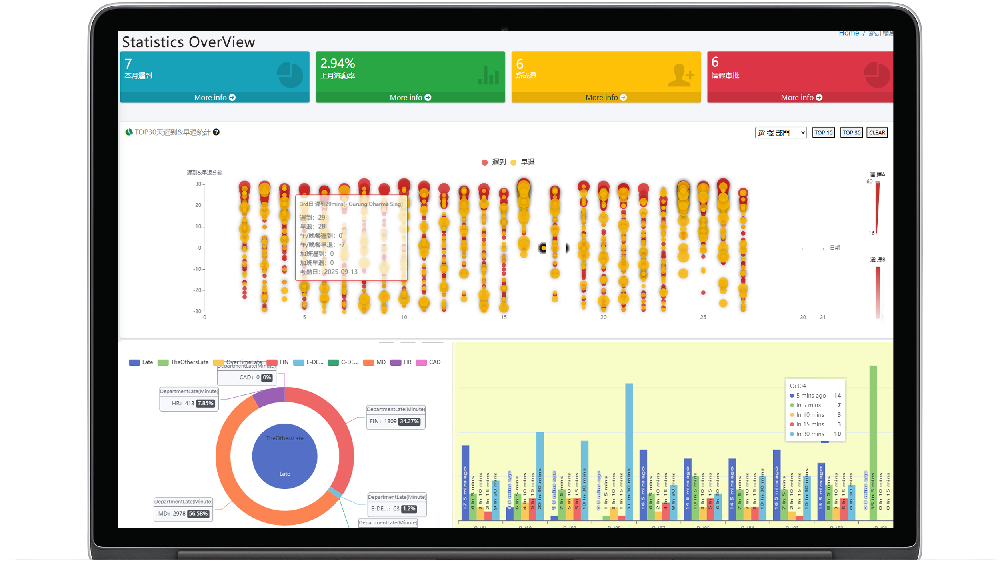
Attendance, Payroll and Access Control Solution for Cost Reduction and Productivity Gains Details
All‑in‑one automated timekeeping and payroll system with robust, secure processes to guarantee payroll integrity. Includes leave management, shift rostering, multi‑site and chain support, multi‑ledger accounting, and comprehensive modules.
The AI Revolution in Intelligent Security Systems: From Passive Defense to Active Prevention
In today's digital era, traditional security systems face unprecedented challenges. As criminal methods become increasingly sophisticated, relying solely on human surveillance and basic alarm systems can no longer meet the security needs of modern enterprises. It is against this backdrop that the introduction of Artificial Intelligence (AI) technology has brought revolutionary changes to the security industry.
Breakthrough Applications of AI in Video Surveillance Systems
Traditional Closed-Circuit Television (CCTV) systems primarily rely on security personnel monitoring video feeds in real-time. This method is not only inefficient but also prone to oversight due to human fatigue. Today, AI-powered video analytics based on deep learning algorithms enable intelligent recognition and analysis of surveillance footage.
- Anomalous Behavior Detection: AI systems can learn behavioral patterns in normal environments. When abnormal activities (such as loitering, trespassing into restricted areas, or unattended objects) are detected, the system automatically triggers an alarm and pushes relevant footage to administrators' devices.
- Facial Recognition and Vehicle Recognition: Combined with high-resolution cameras, AI systems enable accurate facial recognition and license plate recognition, which holds significant value in access control systems and car park management systems. Authorized personnel can enjoy seamless access, while the entry of unauthorized individuals or vehicles triggers alerts.
- Intelligent Search and Forensics: After a security incident, traditional methods require manually reviewing vast amounts of footage to find clues, which is time-consuming and labor-intensive. AI systems support image-based and feature-based video search, greatly improving the efficiency of incident investigation.
IOT Integration in Smart Building Security Systems
The security protection of modern smart buildings is a comprehensive system that requires seamless integration of various subsystems. Internet of Things (IOT) technology plays a central role here. By connecting various sensors, cameras, access card readers, alarms, and other devices to a unified network platform, real-time data collection and interaction are achieved.
- Intelligent Upgrade of ELV Systems: Traditional Extra-Low Voltage (ELV) systems are responsible for basic building functions such as communication, security, and fire protection. Now, by introducing an AI control hub, these subsystems can achieve coordinated responses. For example, when a burglar alarm system is triggered, the system can automatically direct nearby cameras to track the target, simultaneously lock down relevant areas via the access control system, and push alert information to security personnel's mobile terminals and the remote monitoring system.
- Environmental Sensing and Early Warning: Beyond traditional security threats, IOT sensors can monitor environmental parameters such as temperature, humidity, smoke, and gas concentration, enabling early warnings for disasters like fires or leaks.
AI-Enabled Fully Automated ELV Control and Alert Mechanisms
"AI-Enabled Fully Automated ELV Control" represents the cutting edge of current technological development. Its core lies in using AI algorithms for centralized management and intelligent decision-making across a building's entire ELV system.
- Adaptive Security Policies: The system can dynamically adjust security levels based on historical data, real-time pedestrian and vehicle flow, and even external factors like weather and time. For instance, it can automatically increase surveillance levels in sensitive areas during non-working hours or optimize patrol system routes and frequency during large-scale events.
- Predictive Maintenance: Through continuous analysis of equipment operational data, AI can predict potential failures in devices like video surveillance system cameras or access card readers, allowing for scheduled maintenance before failures occur and preventing security vulnerabilities.
- Precision AI Alarms: Traditional alarm systems have high false alarm rates, leading to the "cry wolf" effect. AI, by fusing and analyzing multi-source information (such as video footage, infrared detection, and sound recognition), can significantly improve alarm accuracy, reduce false positives, and ensure that every alert receives timely and effective attention.
Practical Advice for Corporate Procurement
For corporate decision-makers responsible for procuring software systems or security equipment (such as business owners, managers, IT managers, and security managers), the following points should be considered when evaluating and implementing next-generation intelligent security systems:
- System Openness and Integration Capability: The chosen system should have robust open interfaces (APIs) to seamlessly integrate with the company's existing IT infrastructure, Building Management Systems (BMS), and potential future IOT devices. Avoid creating "information silos."
- Data Security and Privacy Protection: AI systems process vast amounts of video and personal information (e.g., facial data). Vendors must provide comprehensive data encryption, storage, and access control solutions that comply with relevant laws and regulations (such as Hong Kong's Personal Data (Privacy) Ordinance).
- Technology Maturity and Scalability: Prioritize proven, market-tested solutions while ensuring the system architecture can support future technological upgrades, such as more advanced AI algorithms or new sensor types.
- Vendor Professional Services and Support: An excellent vendor provides not just products but full-cycle services including planning, deployment, training, and ongoing technical support. Particularly in system integration, the vendor needs extensive experience in cross-system integration.
- Return on Investment (ROI) Analysis: While the initial investment in intelligent systems may be higher, consider the overall value they bring: reduced labor costs, improved security response efficiency, decreased losses from security incidents, and enhanced property management quality.
Conclusion: Embracing the Future of Intelligent Security
The wave of AI industry applications is sweeping through the security sector, driving security systems to evolve from "seeing" to "understanding," "predicting," and "making decisions." For any enterprise or institution that values security, investing in intelligent security systems integrated with AI and IOT technologies is no longer optional but a necessary step to build core competitiveness. By developing intelligent security buildings, companies can not only effectively prevent various risks but also create a safer, more convenient, and efficient working and commercial environment for employees and visitors, ultimately achieving a win-win situation for both security and operational benefits.
































Featured comments
No comments yet. Be the first.
Leave a comment
Bold and lists OK; no external scripts or images
0 / 2000
Comments appear after moderation