Scheduling FAQ: How Does Scheduling Affect Attendance and Payroll? DGX-HRMS Frequently Asked Questions
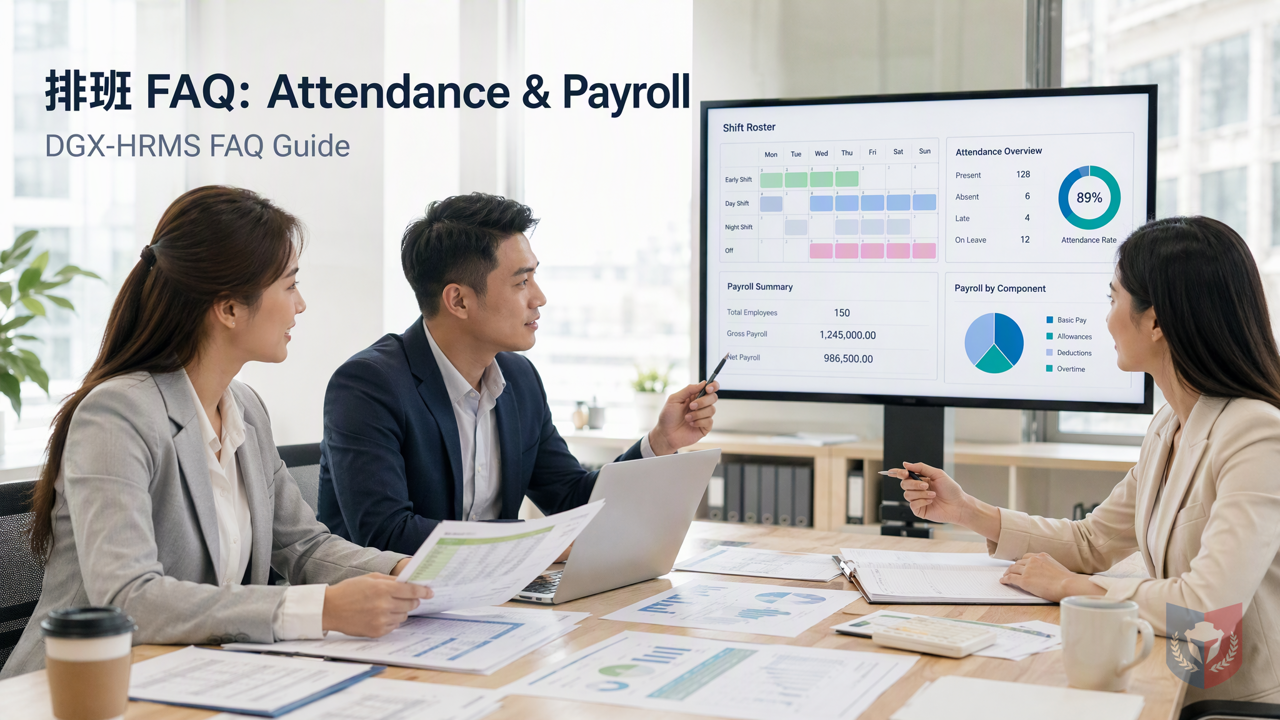
Scheduling is more than just shift planning—it is the starting point for accurate attendance and correct payroll. In FAQ format, this article answers the scheduling-related questions HR and system administrators encounter most often, and explains how DGX-HRMS helps companies optimize HR processes through shift scheduling, flexible attendance, and automated payroll calculation.
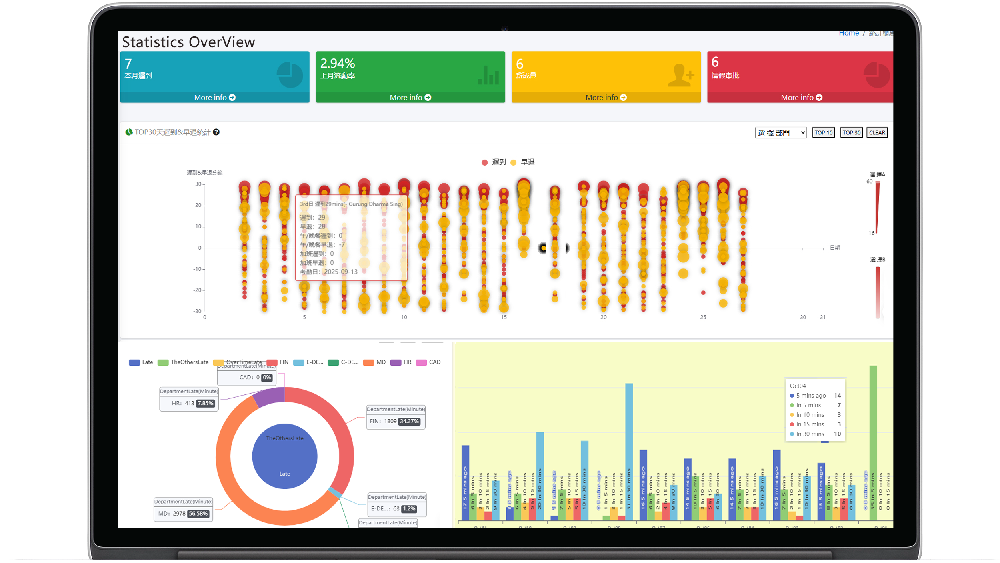
Time & Payroll Suite
Attendance, Payroll and Access Control Solution for Cost Reduction and Productivity Gains Details
All‑in‑one automated timekeeping and payroll system with robust, secure processes to guarantee payroll integrity. Includes leave management, shift rostering, multi‑site and chain support, multi‑ledger accounting, and comprehensive modules.
How Are Scheduling, Attendance, and Payroll Connected? DGX-HRMS FAQ
Scheduling is the starting point of human resources management, yet it is often seen as a simple "shift planning" task. In fact, scheduling directly affects the accuracy of attendance calculations and payroll disbursement. Below is a compilation of the scheduling FAQs most commonly encountered by HR specialists and system administrators, to help you quickly understand the importance of scheduling to the attendance and payroll system, and to explain how DGX-HRMS helps optimize HR processes.
1. After scheduling changes, will attendance records sync automatically?
Yes. DGX-HRMS's shift scheduling management (B3) and flexible attendance calculation (B2) are interconnected. When schedules are adjusted, the system re-compares clock-in records against the latest shift roster and automatically flags anomalies (such as lateness, early departure, and missing punches), reducing manual verification time.
2. How does scheduling for part-time or hourly staff affect payroll calculation?
Payroll for part-time and hourly staff is usually calculated based on actual working hours. DGX-HRMS's automated payroll (B1) reads scheduling and attendance data and automatically calculates pay based on actual attendance hours, overtime hours, and allowance rules, reducing the risk of human error.
3. Can the scheduling system handle multiple shift types (fixed shifts, rotating shifts, flexible shifts)?
Yes. DGX-HRMS supports multiple scheduling modes such as fixed shifts, rotating shifts, and flexible shifts, and different rules can be set by department or position to meet the scheduling needs of industries such as catering, retail, and construction.
4. How do leave applications connect with scheduling and attendance?
Employees submit leave applications through the system. Once the approval process (B4) is completed, scheduling and attendance records are automatically updated, preventing leave periods from being mistakenly counted as absenteeism or attendance anomalies.
5. How does scheduling data ensure the accuracy of payroll calculation?
DGX-HRMS integrates the scheduling, attendance, and payroll modules. Payroll calculation directly references scheduling and attendance data to ensure consistent payroll basis. The system also provides anomaly reports for easy HR review.
6. Does the system support multiple currencies, multiple accounts, and multiple settlement cycles?
Yes. Automated payroll (B1) can handle multiple currencies, multiple accounts, and multiple settlement cycles, making it suitable for enterprises operating across regions or as groups.
7. How is the security of scheduling and attendance data protected?
DGX-HRMS uses technologies such as asymmetric encryption to protect data transmission and storage, and provides permission management (B8) to ensure that only authorized personnel can access sensitive data.
8. Can the system integrate with access control or the CIC interface?
Yes. DGX-HRMS supports access control integration (B5) and the CIC construction industry interface (B6), allowing attendance data to be imported automatically and reducing manual input.
9. What deployment options are available?
Both on-premises and cloud deployment (B9) are available, with support for smooth migration to help enterprises transition from Excel or legacy systems.
10. How do I get started with DGX-HRMS to optimize scheduling and payroll processes?
You are welcome to book a free demo. Our consultants will demonstrate the integrated scheduling, attendance, and payroll workflow based on your industry and scale, and help you evaluate the most suitable solution.
Compliance note: Payroll calculation involves labor regulations and tax requirements. Actual operations should be based on local regulations and professional advice.
CTA: Contact us now to book a DGX-HRMS demo and experience how integrated scheduling, attendance, and payroll can improve HR efficiency.































Featured Reviews
1
The part about schedule changes automatically re-syncing with attendance records is what I'd want to see in action 😊 it's the manual re-checking that always eats up our HR team's time.
Write a review
Supports bold and lists; do not paste external scripts or images
0 / 2000
Visible after review