Essential API Integration for SME HRMS: Seamless Connection Between Scheduling and Attendance Systems
DGX-HRMS attendance and payroll system provides a complete API integration solution, helping SMEs integrate scheduling systems, attendance systems, and payroll calculations to improve HR management efficiency and reduce repetitive work.
Time & Payroll Suite
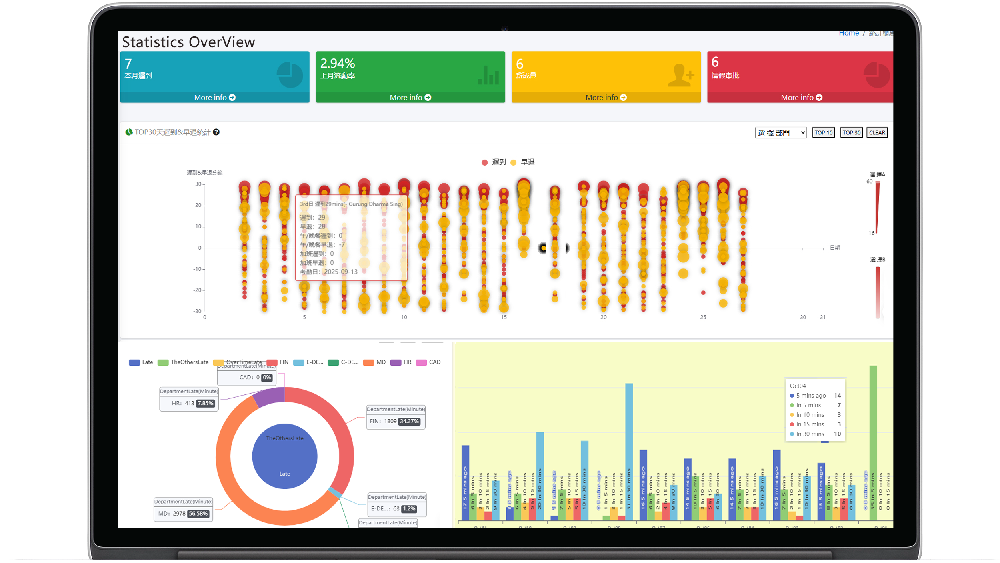
Attendance, Payroll and Access Control Solution for Cost Reduction and Productivity Gains Details
All‑in‑one automated timekeeping and payroll system with robust, secure processes to guarantee payroll integrity. Includes leave management, shift rostering, multi‑site and chain support, multi‑ledger accounting, and comprehensive modules.
The hidden bottleneck to SME growth: systems operating in silos
When a business moves from startup to scale, human resources management is often the first area to feel the pressure. As many SMEs grow, they gradually adopt scheduling systems, attendance systems, payroll calculation tools, and even operational systems such as ERP and CRM. However, if these systems lack integration, they create data silos: when an employee's shift arrangement changes, attendance records must be synced manually; when attendance data changes, payroll calculation must be re-entered. Duplicate work not only consumes time but also introduces the risk of human error.
Why does an HRMS need full-system API integration?
An HRMS (human resources management system) is the core system for enterprise HR management and should serve as the hub for data flow. An HRMS that provides complete APIs can seamlessly connect scheduling systems, attendance systems, and payroll calculation, and exchange data with other enterprise systems. For SMEs, this is not just a technical option but foundational infrastructure to support future growth. As the business continues to grow, headcount, shift complexity, and payroll rules will keep changing, and an HRMS with API integration capabilities can scale on demand, avoiding the pain of frequently replacing systems later.
Seamless connection between scheduling systems and attendance systems
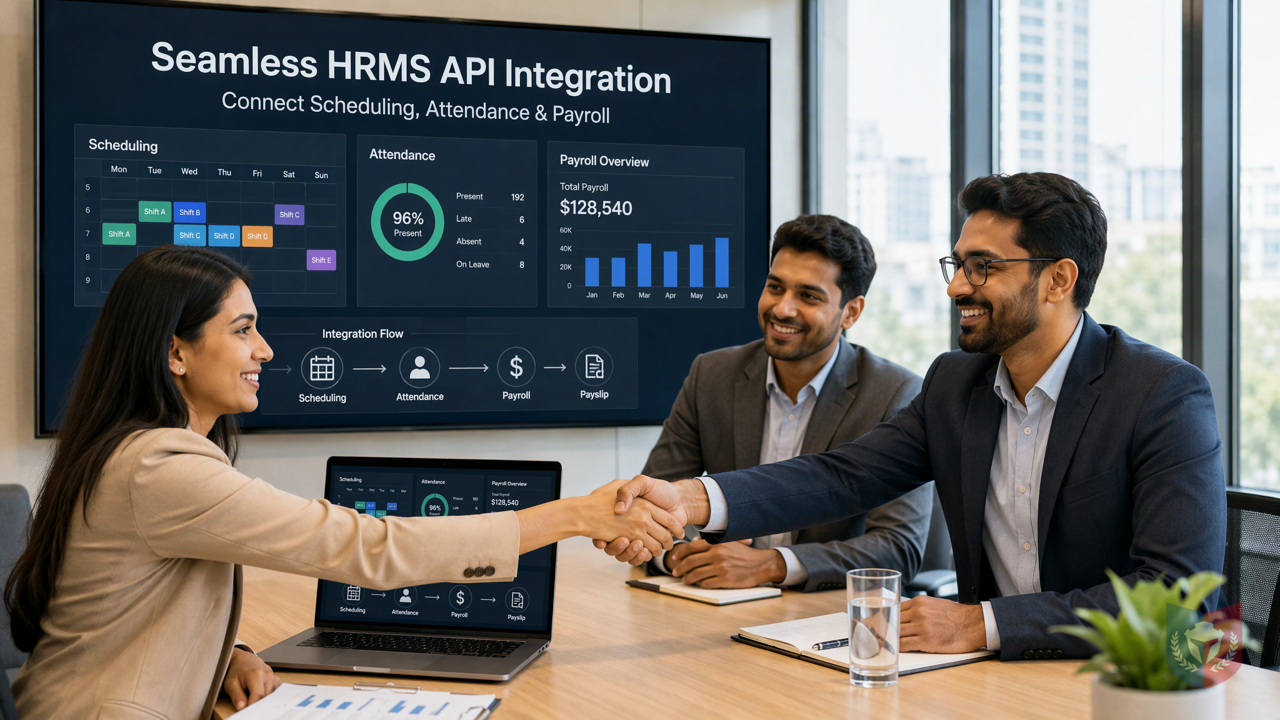
Shift scheduling management is a daily pain point for SMEs in service, retail, manufacturing, and other industries. Traditionally, supervisors may use Excel or paper to arrange shifts, then manually enter the roster into the attendance system. Once a shift is changed at short notice, attendance records may become incorrect, affecting payroll calculation. Through HRMS API integration, the scheduling system can sync with the attendance system in real time: after employees confirm shifts in the scheduling application, the attendance system automatically updates expected attendance records; after employees clock in, actual attendance data is fed back to the scheduling management interface, making it easy for supervisors to identify staffing gaps.
Automated scheduling features can further improve efficiency. The HRMS can generate suggested rosters based on preset rules (such as maximum working hours, skill matching, and employee preferences), reducing manual scheduling time. For SMEs with multiple shifts and multiple locations, an enterprise scheduling solution can ensure company-wide shift arrangements are consistent and compliant.
Linkage between attendance systems and payroll calculation
Data such as attendance, overtime, and leave recorded by the attendance system is the basis for payroll calculation. Through API integration, the attendance system and payroll calculation module can automatically exchange data, avoiding the duplicate work of manually consolidating attendance reports and then entering them into the payroll system. For example, once overtime hours are confirmed by the attendance system, payroll calculation automatically includes overtime pay; leave deductions can also be reflected in real time. This not only reduces human error but also ensures the accuracy and timeliness of payroll disbursement.
Data exchange with other enterprise systems
In addition to scheduling systems and attendance systems, HRMS APIs can also integrate with systems such as ERP and CRM. For example, syncing employee data to ERP ensures correct personnel permissions during procurement and project management; or combining sales staff scheduling with customer visit schedules in CRM to improve business efficiency. For IT decision-makers, an HRMS that provides standard APIs can reduce integration complexity and protect existing system investments.
Key purchasing considerations for SMEs
When evaluating an HRMS, SMEs should pay attention to the following points:
- API completeness: Confirm whether the HRMS provides APIs covering core modules such as scheduling systems, attendance systems, and payroll calculation, and whether it can connect with common enterprise systems.
- Use case fit: Choose appropriate scheduling applications and work scheduling tools based on your industry characteristics (such as shift work and flexible working hours).
- Scalability: Whether the system supports adding modules or users as the business grows, avoiding future re-implementation.
- Vendor support: Whether API integration technical support and documentation are provided to lower the integration barrier.
Conclusion
For SMEs, HR management efficiency directly affects operating costs and employee satisfaction. DGX-HRMS attendance and payroll system provides a complete set of API integration solutions and resources to help businesses tightly integrate scheduling systems, attendance systems, and payroll calculation, and exchange data with other enterprise systems. This not only reduces duplicate work and human error but also allows HR teams to focus on strategic work, laying a solid foundation for business growth.










Featured Reviews
No reviews yet. Be the first to leave one.
Write a review
Supports bold and lists; do not paste external scripts or images
0 / 2000
Visible after review