AI Cameras Become the New Standard for Construction Site Safety: Real-Time Alerts for Accident Prevention and Cost Savings
As construction regulations tighten, project managers and engineers must understand how AI-powered cameras detect site risks in real time, prevent accidents, and reduce downtime and insurance costs—safety and profitability go hand in hand.
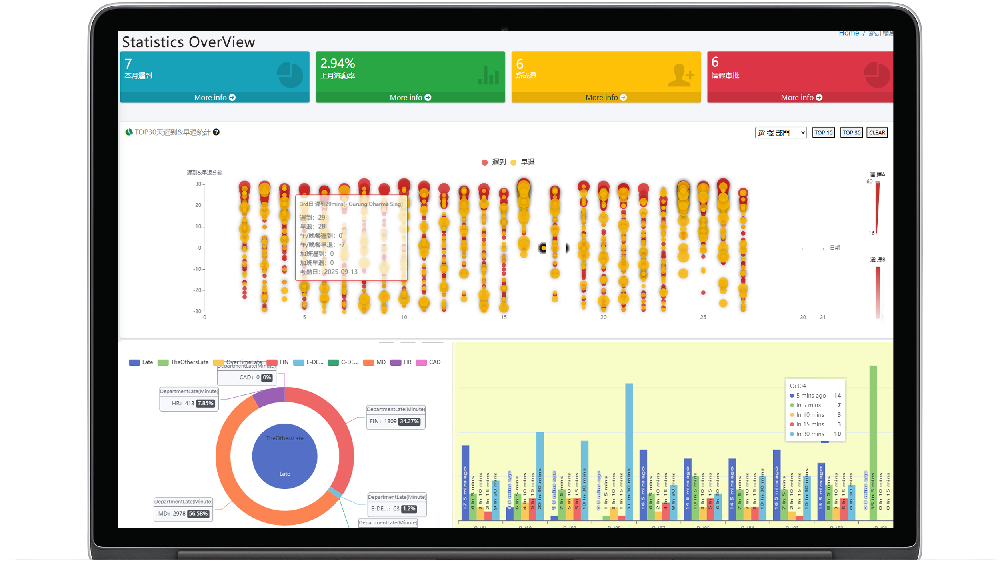
Time & Payroll Suite
Attendance, Payroll and Access Control Solution for Cost Reduction and Productivity Gains Details
All‑in‑one automated timekeeping and payroll system with robust, secure processes to guarantee payroll integrity. Includes leave management, shift rostering, multi‑site and chain support, multi‑ledger accounting, and comprehensive modules.
A New Era of Construction Site Safety: AI Surveillance as a Compliance Essential
The Hong Kong Construction Industry Council (CIC) and the Development Bureau have been pushing forward with new regulations and standards on site safety and digitalised management. For project managers (PMs), engineers and authorised persons, these changes mean tighter compliance obligations and greater accountability. A serious site accident not only threatens workers’ lives but can also lead to work stoppages, legal liability, soaring insurance claims and even disqualification from future tenders. In this increasingly regulated environment, relying solely on manual patrols and after-the-fact reviews is no longer enough.
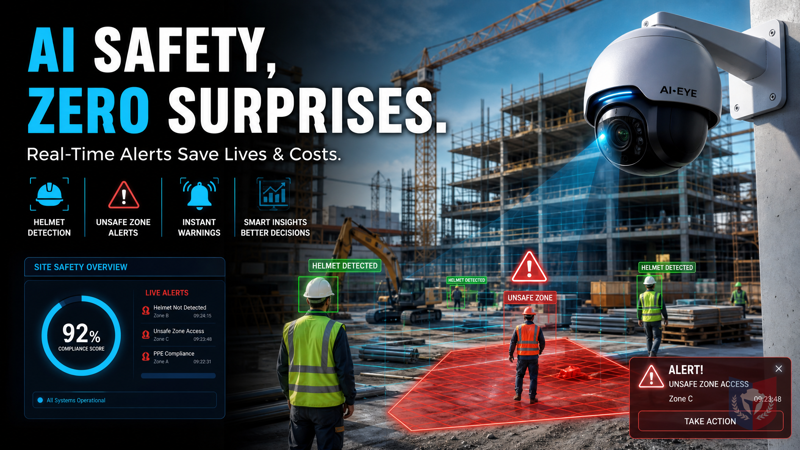
AI-powered surveillance cameras are now providing a game-changing solution for construction site safety. Through advanced image analysis technology, these cameras can automatically detect potential hazards around the clock and issue real-time alerts, allowing management to act before accidents happen. This is not some futuristic concept—these are mature, commercially available features already being adopted across Hong Kong sites, and they are quickly becoming the new standard for safety monitoring.
AI Real-Time Alerts: Four Key Functions Protecting Frontline Workers
Automatic Hard Hat Detection to Eliminate Non-Compliance
Hard hats are the most basic form of protection on a construction site, yet workers sometimes skip them for convenience or oversight. AI cameras come with built-in recognition capabilities that automatically check if every person entering the site is wearing a helmet. The moment someone is detected without one, the system records the event and immediately alerts supervisors. Compared with traditional CCTV that requires someone to constantly stare at screens, AI surveillance offers 24/7 automated inspection with no gaps or fatigue—significantly raising compliance levels.
Intrusion Alerts for Hazardous Zones
Construction sites often contain high-risk areas such as crane operation zones, excavation pits and heavy machinery paths. AI cameras allow management to set virtual boundaries around these zones. If a worker or vehicle enters without permission, the system triggers an instant boundary-crossing alert, prompting an immediate response. This function is particularly effective in preventing serious injuries caused by accidental entry into dangerous areas, while also giving management clear records of violations for corrective action.
Instant Push Notifications for Proactive Management
AI cameras do more than just record footage—they actively notify. When a risk event is detected, the system immediately sends alerts via mobile apps or messaging platforms to project managers, safety officers and other responsible personnel. Even if the team is off-site, they can stay informed and coordinate a fast response. This real-time warning capability transforms safety management from a passive “review footage later” approach into a proactive, immediate-response model.
Data-Driven Reporting for Continuous Improvement
Beyond real-time alerts, AI systems automatically compile daily and weekly safety event reports, including violation counts, risk locations and time patterns. This data helps management identify weak points in site safety and implement targeted training or process improvements. It also provides an objective basis for communication with clients, insurers and regulators, demonstrating the site’s continued investment in safety.
Staying Ahead of New Regulations: The Digital Trend Every PM Must Know
The CIC and Development Bureau’s initiatives on subcontractor registration and digitalised management are all aimed at raising safety standards across the industry through technology. For project managers, adopting AI-based site safety surveillance not only aligns with regulatory expectations but also signals strong commitment to safety during tenders and evaluations.
Construction is a sector with diverse trades and a highly mobile workforce. Traditional induction training and spot checks alone cannot completely eliminate unsafe behaviour. AI offers an objective, continuous and traceable monitoring mechanism that makes a site’s safety performance measurable and transparent. This is exactly the kind of digital tool that project leaders need to stay compliant and reduce liability. Early adoption of AI surveillance creates an intelligent safety net for the site, lowering the risk of violations and accidents, and avoiding legal consequences.
Commercial Returns: Less Downtime, Lower Insurance Costs, Greater Efficiency
When considering AI cameras, management often asks: What is the return on investment? The benefits of AI site surveillance go far beyond compliance. Here are three areas where costs can be saved:
Reducing Stoppage Losses and Protecting Project Schedules
A serious accident on site often requires immediate stoppage for investigations. Every day of downtime incurs labour, machinery, and management costs, and delays may lead to contractual penalties. AI real-time alerts can prevent accidents from happening in the first place, dramatically lowering the chance of work stoppages. Even for minor violations, managers can step in early to prevent escalation. Compared with the cost of even a single day’s stoppage, the investment in AI surveillance is negligible.
Lowering Insurance Premiums and Improving Claims Records
Accident rates are a key factor insurers use to set premiums. With AI surveillance, a site’s safety record improves, claims drop, and there is stronger leverage for negotiating premium reductions at renewal. Insurers increasingly recognise the value of technology-assisted safety management, and some offer preferential rates for projects equipped with advanced monitoring systems. Over time, insurance savings alone can cover the operating cost of the AI system.
Enhancing Management Efficiency and Releasing Manpower
Traditional safety management relies on safety officers patrolling and supervising, but a large site can never be fully covered manually. AI cameras take over repetitive surveillance tasks, freeing up safety officers to focus on high-risk permits and frontline guidance. Management teams can also check site status remotely via mobile devices, reducing travel time. Greater management efficiency translates directly into higher productivity.
Practical Example: Building a Business Case for Management
Consider a medium-sized site that experiences two minor safety incidents per month, each costing roughly HK$100,000 in handling and downtime. After adopting AI surveillance, incidents drop by 80%, saving HK$160,000 per month—almost HK$2 million annually. Add lower insurance premiums due to a better record, plus the avoidable cost of a major accident, and the return on investment becomes compelling.
Actual figures will vary with site size and risk profile, but decision-makers should also weigh the intangible benefits: company reputation, worker morale and tender competitiveness. Including an AI safety monitoring solution in bid proposals can be a differentiator that demonstrates technological leadership and care for worker welfare.
Conclusion: AI Site Surveillance Is Now a Necessity
Regulatory requirements in Hong Kong’s construction industry will only become stricter. Digital safety management has shifted from “optional” to “essential.” AI-powered cameras that detect site risks in real time empower project managers to prevent accidents effectively, while saving downtime and insurance costs—meeting both compliance demands and business objectives.
For engineers, project managers and authorised persons, now is the time to evaluate and adopt an AI-based site safety surveillance system. It is not merely a camera—it is an intelligent safeguard that protects lives and project profitability. Seize the opportunity and put your site at the forefront of safety and efficiency.












Featured Reviews
No reviews yet. Be the first to leave one.
Write a review
Supports bold and lists; do not paste external scripts or images
0 / 2000
Visible after review