Smart Site, New Standard: 5 Key Points to Choose Your Security Surveillance Solution
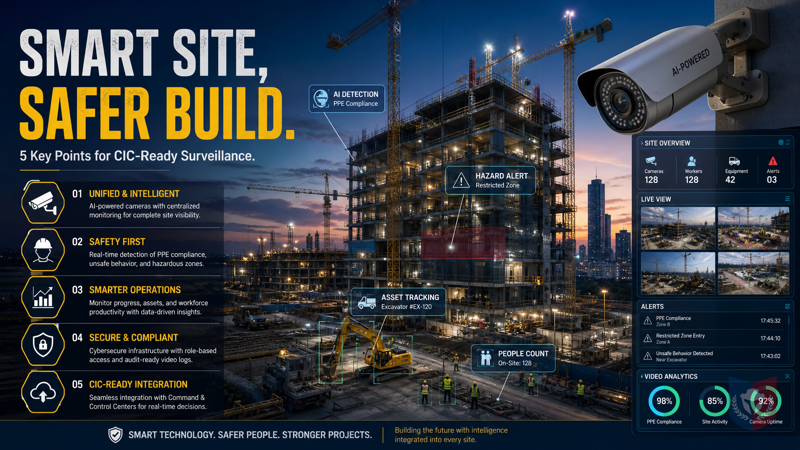
Facing the CIC’s new digital safety requirements, from coverage to system integration, five essential points help you pick the right security surveillance solution.
Time & Payroll Suite
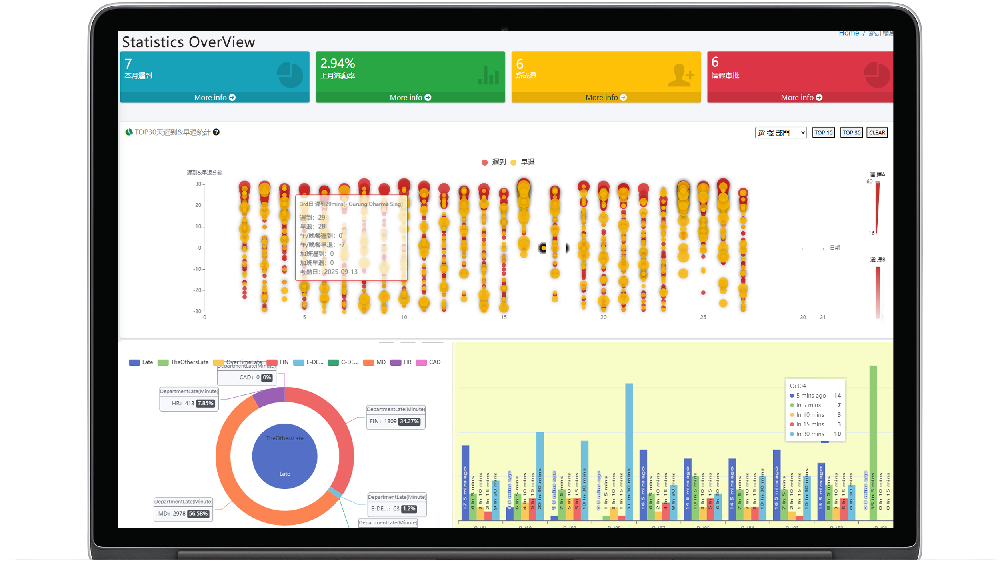
Attendance, Payroll and Access Control Solution for Cost Reduction and Productivity Gains Details
All‑in‑one automated timekeeping and payroll system with robust, secure processes to guarantee payroll integrity. Includes leave management, shift rostering, multi‑site and chain support, multi‑ledger accounting, and comprehensive modules.
A New Era of Digitalised Site Safety
The Hong Kong Construction Industry Council (CIC) and the Development Bureau have been driving major changes in site safety and subcontractor registration through digitalised management. New regulations and standards are being rolled out, and for project leaders, project managers (PMs) and site agents, this is far more than an administrative update — it directly affects compliance, legal accountability and overall project risk. In other words, a security surveillance solution is no longer a back-office extra; it is essential infrastructure within a smart site’s digital safety blueprint.
Facing the CIC’s new digital safety requirements — from coverage to system integration — these five key points will help you choose the right security surveillance solution. This buying guide gives busy engineering teams a practical route to compliance.
Point 1: Camera Coverage — Don’t Let Blind Spots Become Safety Gaps
A construction site is a complex environment: high-level work zones, material storage, entry and exit points, tower crane lifting routes — every area has different monitoring needs. Selection must start from the site’s actual workflow, not just its floor area. Project managers should carry out site surveys with the contractor to identify high-risk zones and ensure camera placement covers key circulation routes and work points. Chasing a larger number of cameras without a thoughtful layout only makes it harder for frontline teams to spot the important details.
Point 2: Night-Time Monitoring — Clear Images Even in Low Light
Hong Kong construction sites often operate early in the morning, late at night, and during adverse weather. When surveillance images become blurry after dark, vigilance drops. Buyers should assess low-light performance and whether supplementary lighting or supporting features are needed. A reliable solution keeps delivering usable, clear footage day and night — acting as a genuine “second pair of eyes” for site management.
Point 3: Alarm Accuracy — Fewer False Alarms, Sharper Response
Smart analytics are increasingly common, but the biggest frustration is frequent false alarms. After dozens of false alerts each week, frontline staff become numb, and real incidents may be ignored. When evaluating solutions, look at alarm accuracy and how easily detection zones, sensitivity and time windows can be tuned to suit the site environment. Accurate alarms help safety teams focus on genuine risks and respond faster.
Point 4: Integration with CIC Digital Platforms — Compliance Means Connected Data
At the heart of the CIC’s digital safety policy is the effective recording, tracking and reporting of site safety data. A surveillance solution’s ability to connect smoothly with relevant digital platforms directly affects compliance efficiency. Engineering teams should ask whether the system can produce standardised event logs and reports and support necessary data integration. An experienced integrator shortens the learning curve and helps sites reach compliance faster.
Point 5: After-Sales Maintenance and Scalability — A Long-Term Investment
A construction project runs for months or years, and site conditions keep changing. Today’s camera layout may need adjustment when activities move to another zone. Buyers should consider system scalability, maintenance response times and ongoing technical support. A solution that can grow with project progress is far more cost-effective than a one-off installation — and it reduces the cost of replacing an inflexible system later.
The Decisive Factor: Experience in Integration Matters More Than Hardware Alone
There is no shortage of surveillance equipment on the market, but hardware is only the starting point. What turns a smart site into reality is the contractor’s ability to integrate — from site survey and camera layout to alarm configuration and data connection with CIC digital platforms. Contractors with solid integration experience help engineering teams reach compliance faster and reduce the cost of trial and error. It avoids the painful situation of “buying first, discovering later that it doesn’t fit.”
Conclusion: One-Stop Consultancy Lowers the Risk of Choosing the Wrong System
Digital safety policy is not a passing trend, and rushing a last-minute response is never ideal. A one-stop consultancy service supports engineering teams through requirement assessment, solution design, implementation and acceptance — ensuring the surveillance system truly fits site operations and meets CIC requirements. The biggest cost of choosing the wrong system is not the hardware; it is lost time and compliance risk. Finding the right partner is the key to steady progress on a smart site.
































Featured Reviews
1
I'd like to ask, if a site already has an old surveillance system, must the whole set be replaced to meet the new requirements? Or can it be partially upgraded? 🤔
Write a review
Supports bold and lists; do not paste external scripts or images
0 / 2000
Visible after review