Failure to Delete Ex-Employee Attendance Records: Are Companies Falling into the Privacy Ordinance Trap?
With the Privacy Commissioner tightening enforcement, retaining ex-employees' access control and attendance records can lead to compliance risks. Discover how automated systems can mitigate these risks and protect your corporate reputation.
Time & Payroll Suite
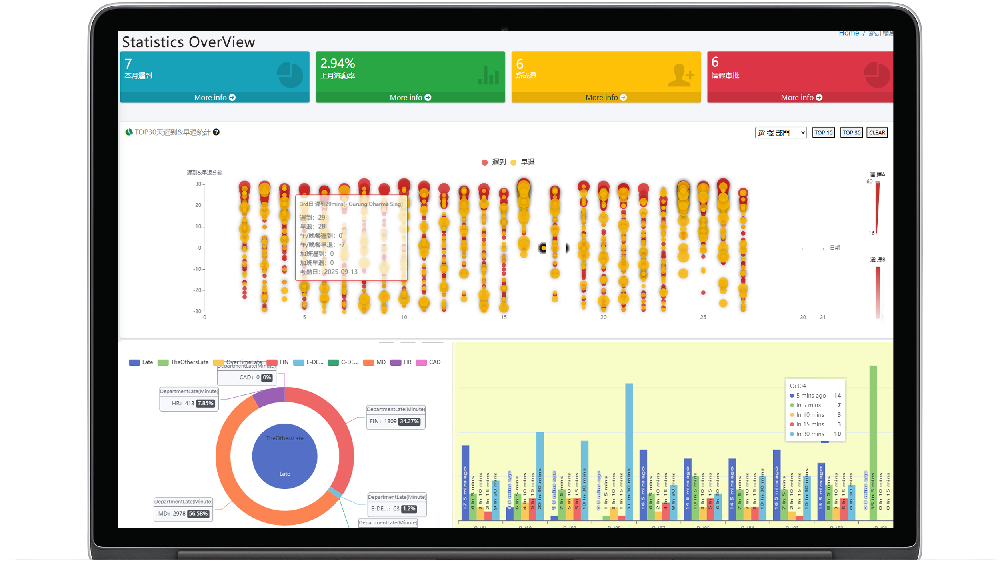
Attendance, Payroll and Access Control Solution for Cost Reduction and Productivity Gains Details
All‑in‑one automated timekeeping and payroll system with robust, secure processes to guarantee payroll integrity. Includes leave management, shift rostering, multi‑site and chain support, multi‑ledger accounting, and comprehensive modules.
Failure to Delete Ex-Employee Records: Rising Compliance Risks for Businesses
Recently, the Office of the Privacy Commissioner for Personal Data (PCPD) has notably intensified its enforcement efforts, with multiple cases involving improper retention of ex-employees' personal data being publicly followed up. Among these, residual records of departed staff in access control and attendance systems have become a focal point of compliance scrutiny. Many SME managers and HR professionals may not realise that these seemingly minor data points, if handled improperly, could contravene the Personal Data (Privacy) Ordinance, leading to labour disputes and even legal liability.
Common Pitfalls: Oversights in Manual Deletion and Management Resistance
Under traditional management, after an employee leaves, their access card permissions and attendance records often require manual deletion. However, frontline managers are burdened with daily tasks, and the deletion process is cumbersome, leading to resistance and subsequent omissions or delays. Some companies even believe in retaining old records "just in case," overlooking that this is a high-risk violation.
According to the Personal Data (Privacy) Ordinance, personal data should not be kept longer than is necessary for the fulfilment of the original purpose. Once an employee departs, their access and attendance records no longer serve a purpose; failure to delete them promptly may constitute a violation. The PCPD has the power to investigate and issue enforcement notices requiring rectification. Non-compliance can result in fines and reputational damage, affecting customer confidence and talent recruitment.
Consequences of Non-Compliance: Complaints, Investigations, and Reputational Damage
If a former employee discovers that their personal data has been improperly retained, they can lodge a complaint with the PCPD. Upon receiving a complaint, the PCPD will investigate and, if a violation is confirmed, the company will face legal consequences. Moreover, labour disputes can arise anytime, anywhere, and ex-employees may use this as grounds for claims, further increasing operational risks.
Furthermore, if a company is publicly named for non-compliance, negative news spreads quickly, causing irreparable damage to brand image. In today's business environment that values corporate social responsibility, compliance is not just a legal requirement but a necessity for maintaining competitiveness.
How Automation Mitigates Risks: Compliance Benefits of DGX-HRMS
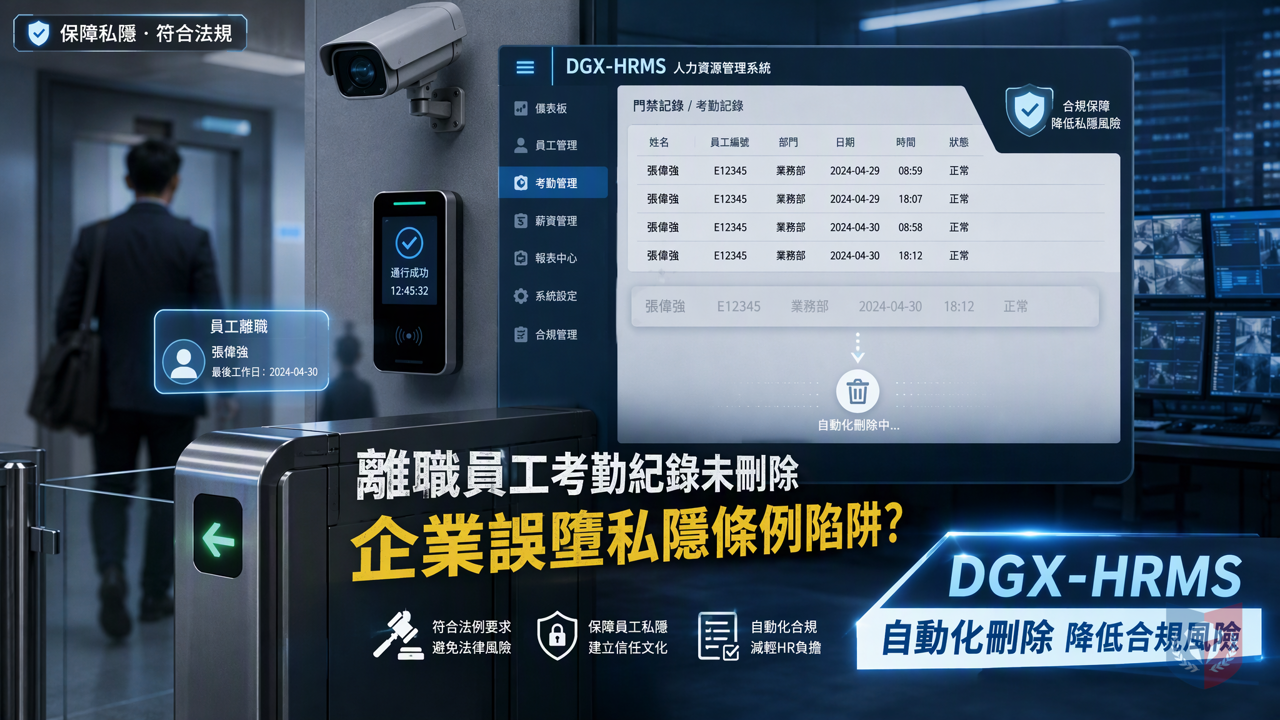
To address the shortcomings of manual processing, Dinghui Computer Systems Limited offers the DGX-HRMS attendance and payroll system, designed specifically for such compliance pain points. The system features automated deletion of ex-employee records: upon completion of the departure process, it automatically removes access permissions and attendance records according to preset rules, without manual intervention.
This significantly reduces the workload of management, lowers the risk of omissions due to resistance, and ensures strict adherence to the Privacy Ordinance. DGX-HRMS's automation makes compliance simple and reliable, freeing businesses from the fear of inadvertent violations.
Selection Criteria: Compliance, Convenience, and Returns
When choosing an attendance and payroll system, businesses should prioritise solutions with automated data cleansing. DGX-HRMS not only meets compliance requirements but its user-friendly design also enhances HR efficiency. In the long run, investing in compliance technology avoids potential legal costs and reputational damage, yielding significant returns.
In conclusion, enforcement of the Privacy Ordinance will only intensify. Businesses must address the handling of ex-employee records. Rather than relying on manual operations, leveraging automated systems like DGX-HRMS can fundamentally reduce compliance risks, allowing management and HR professionals to focus on core business with peace of mind.
This article is for reference only and does not constitute legal advice. Companies should consult professional legal advisors for their specific circumstances.































Featured comments
No comments yet. Be the first.
Leave a comment
Bold and lists OK; no external scripts or images
0 / 2000
Comments appear after moderation