網店與連鎖:同一套庫存帳如何實現線上線下融合
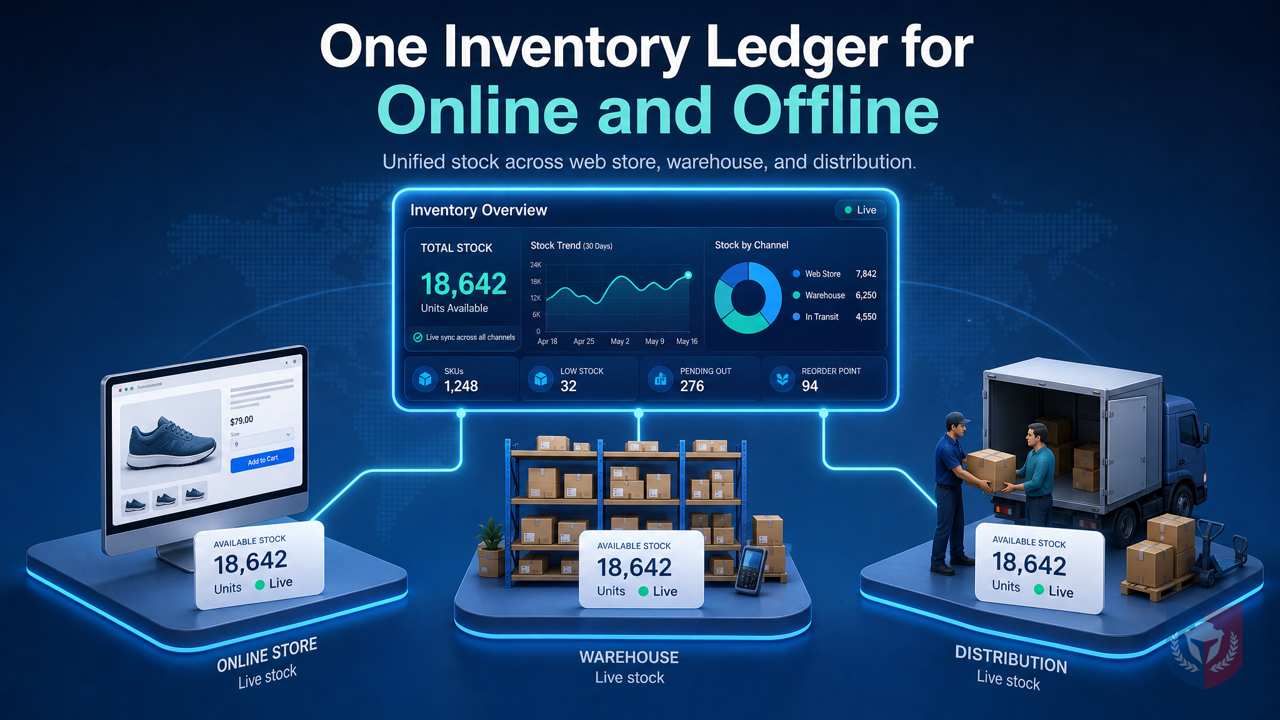
當網店、實體倉庫、分銷各自管貨,超賣、缺貨、積壓便成為常態。iShop.X90 以供應鏈驅動的 AI 網店為命題,讓線上、門店、分銷接到同一套可用量,下單扣庫、缺貨再訂、出貨給分銷都回到這套庫存。本文將從概念與實務角度,探討供應鏈獨立成底層的價值,並區分業界說法與 iShop.X90 的公開表述。
Time & Payroll Suite
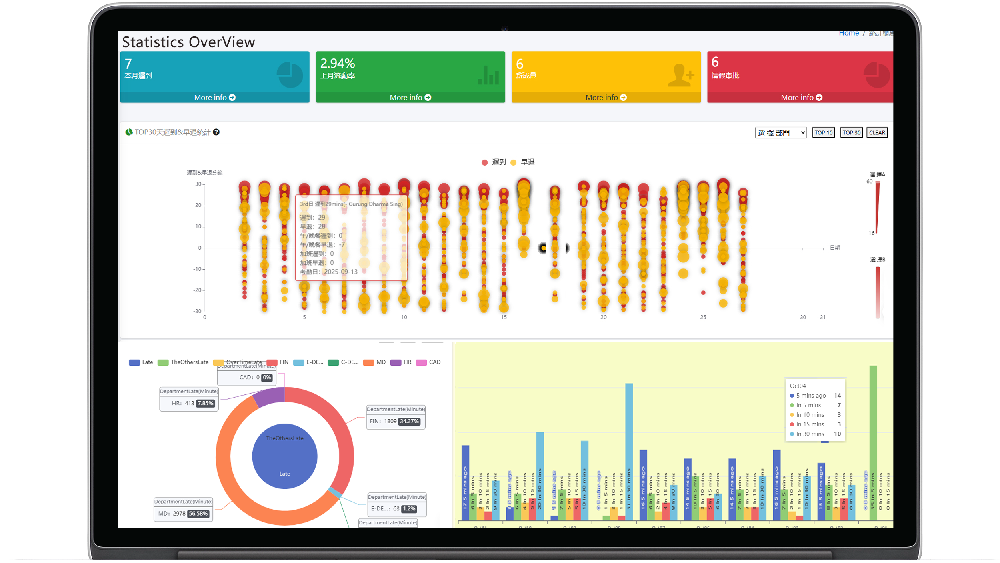
Attendance, Payroll and Access Control Solution for Cost Reduction and Productivity Gains Details
All‑in‑one automated timekeeping and payroll system with robust, secure processes to guarantee payroll integrity. Includes leave management, shift rostering, multi‑site and chain support, multi‑ledger accounting, and comprehensive modules.
Multi-channel inventory challenges
Chain retail operators generally face a reality: online stores, physical warehouses, and distribution each manage their own inventory. The online store backend has one set of inventory records, store POS has another, and the warehouse uses spreadsheets or legacy systems to record inbound and outbound movements. The result is a rotating cycle of overselling, stockouts, and overstocking. A customer places an order on the online store, but the store has already sold the last unit; distribution checks available quantity and gets a number that does not match the actual warehouse. The root of these problems is that inventory data is split into multiple isolated silos.
A common industry saying is that "the supply chain is subordinate to the online store," meaning you first open an online store and then add inventory functionality. But this ignores the complexity of chain retail: stores need replenishment, warehouses need to ship, and distribution needs accurate available quantities. If the supply chain is merely a subordinate function of the online store, it becomes difficult to integrate physical warehouses and distribution into the same process.
Supply chain as an independent foundation: iShop.X90's public statement
iShop.X90 is a supply chain-driven AI online store software product. Its core proposition is: the supply chain is not a subordinate function of any single online store, but an independent foundation. Physical warehouses use it to manage warehouses, goods, and inbound/outbound movements; online stores and distribution bring inventory, replenishment, and shipping into the same set of records. In other words, stores, warehouses, online stores, and distribution share the same inventory records.
This public statement emphasizes "the same set of inventory": on-hand, reserved, and available quantities are recorded in the same set of records; receiving, outbound, and returns all leave a transaction trail. Online, stores, and distribution connect to the same set of available quantities; ordering deducts inventory, out-of-stock triggers reordering, and shipping to distribution all return to this inventory. In this way, when adding online stores, distribution, or stores, there is no need to start a separate inventory system, reducing data duplication and human error.
Physical warehouses and handheld stocktaking
iShop.X90 lets physical warehouses use it to manage warehouses, goods, and inbound/outbound movements. With handheld stocktaking devices, warehouse staff can record receiving, outbound, and returns in real time, with a clear and traceable transaction trail. The main warehouse and branches replenish and ship together, without each store keeping its own records. This solves the common chain retail problem of "disconnected inventory between the main warehouse and branches," improving replenishment and shipping efficiency.
Online stores and chains: the same set of available quantities
For chain retail operators, integrating online store and store inventory is key. iShop.X90 lets online, stores, and distribution connect to the same set of available quantities. When a customer places an order on the online store, the system deducts inventory in real time; store sales are likewise reflected in the same set of records. When available quantity is insufficient, the system can trigger reordering based on settings or prompt replenishment. When shipping to distribution, inventory changes also return to this set of records. This means that whether it is an online store, a store, or distribution, they all see the same set of numbers, naturally reducing the risk of overselling and stockouts.
AI inventory decisions: overstock and slow-moving items, confirmed by people
iShop.X90 introduces AI inventory decisions, with a focus on identifying overstock and slow-moving items. AI analyzes inventory turnover, identifies products that may be overstocked or slow-moving, and provides suggestions. But suggestions are confirmed by people: AI is responsible for spotting problems and providing direction, while people are responsible for accepting or rejecting. Who can change inventory and who confirms suggestions remains in the human confirmation step. This ensures transparency and controllability of decisions, and also meets chain retail's requirements for inventory accuracy.
Consistent accounting standards and implementation sequence
iShop.X90 emphasizes consistent accounting standards: inventory, replenishment, shipping, and distribution all see the same set of numbers. This is not only a technical issue but also a management issue. When all channels share the same set of records, financial and operational reconciliation becomes much simpler.
For chain retail operators intending to adopt it, the recommended implementation sequence is as follows: first clarify existing inventory management pain points and confirm the necessity of the supply chain as an independent foundation; then evaluate how iShop.X90 incorporates physical warehouses, online stores, and distribution into the same set of inventory; finally plan application scenarios for AI inventory decisions and clarify the division of labor between humans and machines.
Pricing method and public information
iShop.X90's pricing method is open and transparent; for details, please refer to the official information. For more public statements about iShop.X90, please see https://xguard.hk/zh-HK/Ishop.
Conclusion
Inventory management in multi-channel retail should not be fragmented. Positioned as a supply chain-driven AI online store, iShop.X90 lets online stores and chain stores share the same set of inventory, so online and offline no longer oversell or run out of stock, and replenishment and shipping efficiency improves. For chain retail operators, this is not only a tool upgrade but also a shift in operational thinking: from fragmented management to a unified foundation, from manual judgment to AI assistance with human confirmation.






























Featured Reviews
No reviews yet. Be the first to leave one.
Write a review
Supports bold and lists; do not paste external scripts or images
0 / 2000
Visible after review