Not Tied to a Single Online Store: iShop.X90 Supply Chain Independence and Scalability
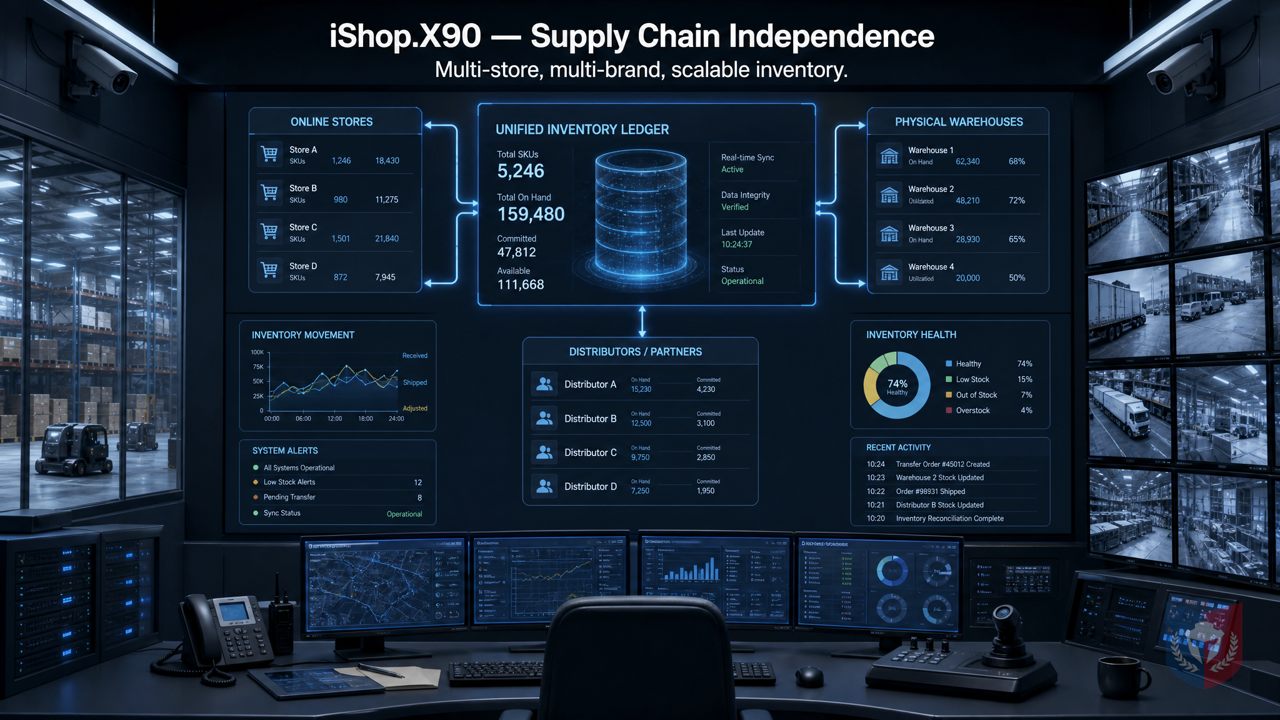
When a business moves from a single online store to multiple brands, multiple stores, and multiple distribution channels, should the supply chain belong to one online store or stand alone as an underlying layer? iShop.X90 uses the same set of inventory accounts so online stores, physical warehouses, and distribution each manage their own goods without overselling, stockouts, or overstock. AI identifies overstock and slow-moving items, and recommendations are confirmed by people.
Time & Payroll Suite
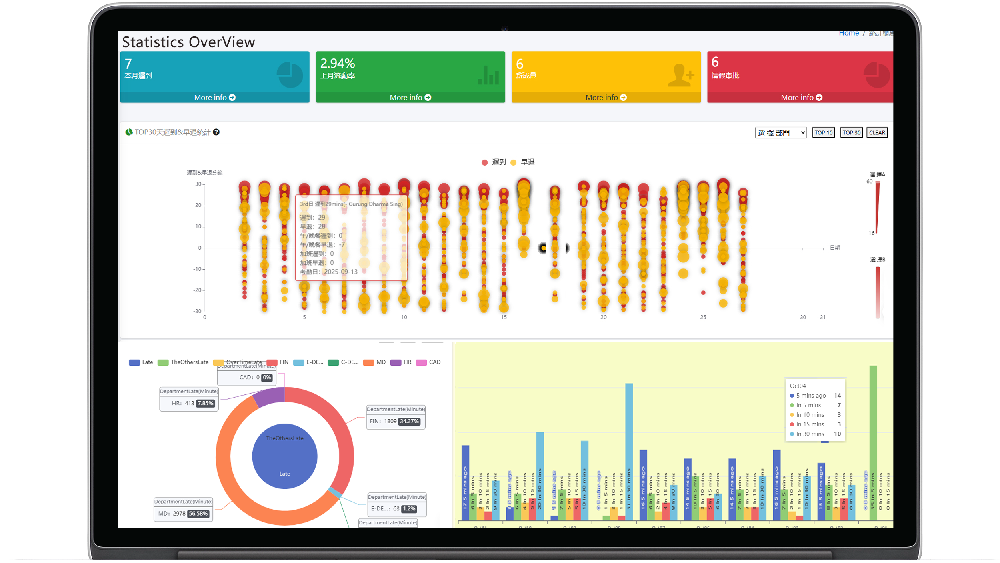
Attendance, Payroll and Access Control Solution for Cost Reduction and Productivity Gains Details
All‑in‑one automated timekeeping and payroll system with robust, secure processes to guarantee payroll integrity. Includes leave management, shift rostering, multi‑site and chain support, multi‑ledger accounting, and comprehensive modules.
Supply Chain-Driven AI Online Store: iShop.X90's Independent Supply Chain Thinking
In today's world where multi-channel retail has become the norm, many businesses operate online stores, physical stores, and distribution channels simultaneously, yet often fall into the dilemma of inventory operating in silos: the online store, physical warehouse, and distribution each manage their own goods, making it easy to oversell, run out of stock, or accumulate excess. The core question to answer is: is the supply chain subordinate to the online store, or does it stand independently as a foundation? iShop.X90's answer is the latter—the supply chain is not an attached function of any single online store, but a foundational capability independent of any single online store.
Inventory Challenges Under Multi-Channel
When a business has only one online store, inventory management is relatively simple; but as the business expands and adds new online stores, distribution, or stores, if each still keeps its own books, the same batch of goods is often counted repeatedly across multiple channels, leading to frequent overselling and stockouts, while excess and slow-moving stock are hard to detect. The industry's common phrase is "inventory synchronization," but behind synchronization, without a unified underlying ledger, synchronization is merely superficial.
Three Layers of Public Statements: Concept, Practice, and AI
iShop.X90's public statements can be divided into three layers: the concept layer emphasizes that the supply chain is independent of any single online store; the practice layer explains that physical warehouses use it to manage warehouses, goods, and inbound/outbound, while online stores and distribution bring inventory, replenishment, and shipping onto the same set of books; the AI layer looks at excess and slow-moving stock and makes suggestions for people to confirm. These three layers distinguish industry statements from iShop.X90's public statements, and also give businesses a clear basis when selecting a solution.
One Set of Inventory: Online, Stores, and Distribution Share One Ledger
In iShop.X90's design, stores, warehouses, online stores, and distribution share the same inventory ledger. Online, stores, and distribution receive the same set of available quantities; order placement deducts inventory, out-of-stock reordering, and shipping to distribution all return to this set of inventory. On-hand, reserved, and available quantities are recorded in the same ledger, and receiving, outbound, and returns all leave a transaction trail. This means inventory, replenishment, shipping, and distribution see the same set of numbers; the main warehouse and branches replenish and ship together, without each store keeping its own separate book.
Not Tied to a Single Online Store: Easy to Expand to Multiple Stores and Brands
iShop.X90's supply chain is independent of any single online store; when adding new online stores, distribution, or stores, there is no need to set up a separate inventory system. Data for multiple brands, multiple domains, and multiple sites is kept separate, and accounts can switch stores—this is a public practical statement, not the name of an undisclosed technical architecture. Businesses can expand flexibly without being locked into the inventory logic of a single online store.
Same Accounting Standard: Consistent Inventory, Replenishment, and Shipping
Inventory, replenishment, shipping, and distribution see the same set of numbers, so accounting naturally follows the same standard. This not only reduces manual reconciliation errors but also allows management to make decisions based on consistent data. Who can modify inventory and who confirms suggestions remain in the human confirmation step, ensuring data changes are traceable.
Physical Warehouses and Handheld Stocktaking
Physical warehouses use it to manage warehouses, goods, and inbound/outbound, and with handheld stocktaking, warehouse operations and system data are aligned in real time. Accurate inventory, reservations, and returns are the prerequisite for meaningful suggestions. Without accurate underlying data, any AI suggestion is merely castles in the air.
Online Stores and Chains: Main Warehouse and Branch Coordination
For chain-operated businesses, iShop.X90 lets the main warehouse and branches replenish and ship together, without each store keeping its own separate book. Online stores and distribution bring inventory, replenishment, and shipping onto the same set of books, achieving online-offline integration.
AI Inventory Decisions: Excess and Slow-Moving Stock Reviewed by People
AI is responsible for identifying excess and slow-moving stock and making suggestions; people are responsible for accepting or rejecting them. AI does not execute automatically but provides decision support. This ensures inventory strategy always remains under human control, avoiding the risks brought by automation.
Implementation Sequence and Pricing Method
When implementing iShop.X90, businesses can start with warehouse management in sequence, then expand to online stores and distribution, and finally introduce AI suggestions. The pricing method is open and transparent, and businesses can choose a suitable plan based on their own scale and needs. For detailed public information, see https://xguard.hk/zh-HK/Ishop.
In summary, iShop.X90 positions itself as a supply chain-driven AI online store, and through an independent supply chain foundation, one set of inventory books, and AI-assisted decision-making, helps businesses stay flexible and accurate amid multi-channel expansion. This is not only a technical choice but also an upgrade of business strategy.





























Featured Reviews
No reviews yet. Be the first to leave one.
Write a review
Supports bold and lists; do not paste external scripts or images
0 / 2000
Visible after review