Online Store and Chain: How One Inventory Ledger Unifies Online and Offline
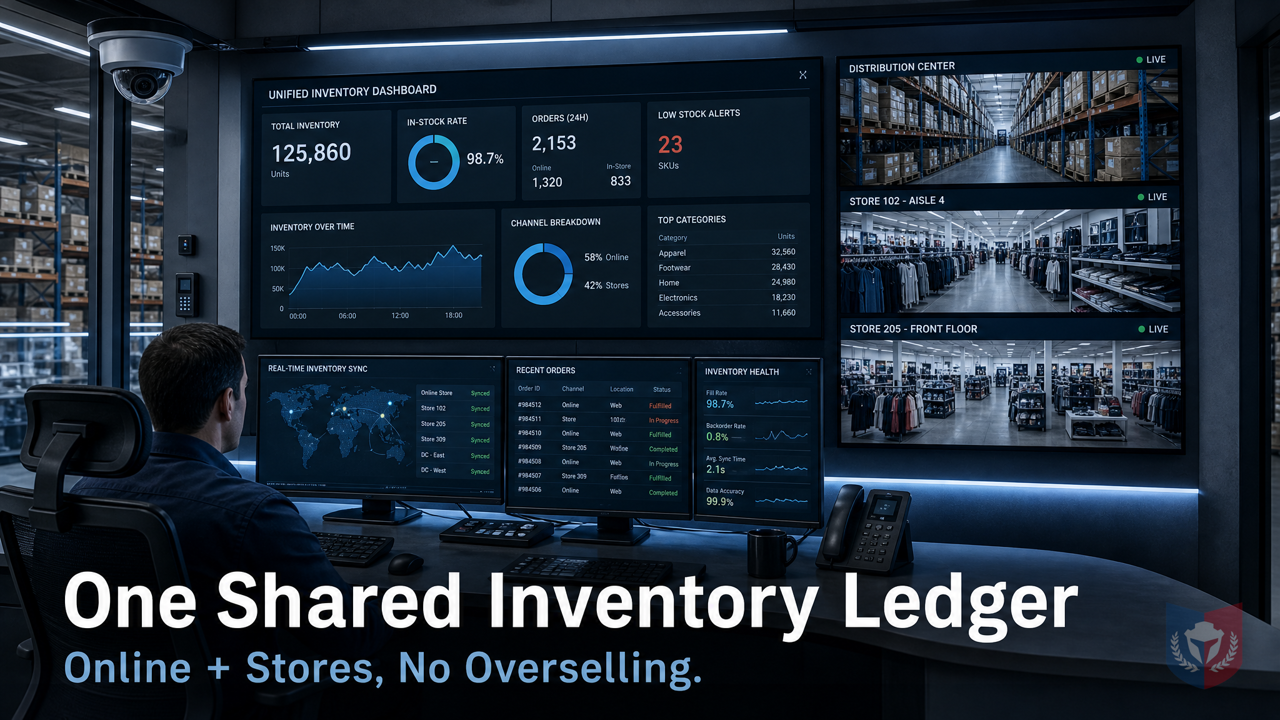
iShop.X90 makes the supply chain an independent foundation, so stores, warehouses, online shops, and distribution share the same inventory ledger—ending overselling, stockouts, and overstock.
Time & Payroll Suite
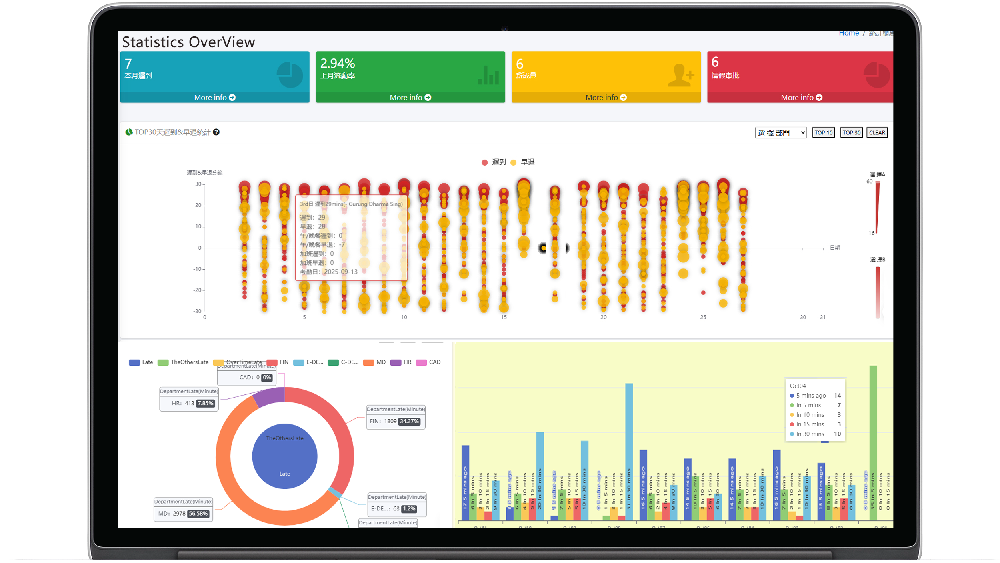
Attendance, Payroll and Access Control Solution for Cost Reduction and Productivity Gains Details
All‑in‑one automated timekeeping and payroll system with robust, secure processes to guarantee payroll integrity. Includes leave management, shift rostering, multi‑site and chain support, multi‑ledger accounting, and comprehensive modules.
Inventory Pain Points in Multichannel Retail
In an operating model where chain retail and online stores run in parallel, inventory management is often the most troublesome part. Many operators have had similar experiences: the online store, physical warehouse, and distribution channels each manage their own goods, and as a result, online sales oversell in-store stock; only when the store restocks does it discover that the warehouse has already been occupied by distribution orders, or that a certain batch of goods has been sitting in the backend for over half a year without anyone noticing. The root of these problems is that inventory data is split into multiple sets of books that cannot be aligned with each other in real time.
A common saying in the industry is that "the supply chain is subordinate to the online store," meaning that an online store platform comes first, and then an inventory module is attached. But this approach easily falls short once there are many channels. The public statement put forward by iShop.X90 is different: the supply chain is not an attached function of any single online store; instead, it stands independently as the underlying layer, so that all sales channels connect to the same set of inventory.
The question to answer: Is the supply chain attached or the underlying layer?
The answer to this proposition determines whether the system can support chain-scale operations. If the supply chain is merely attached to the online store, then every time a new store opens or a new distribution channel is connected, a separate inventory logic must be set up, and data synchronization will always lag. The design of iShop.X90 is to make the supply chain independent of any single online store and turn it into an underlying capability, with stores, warehouses, online stores, and distribution sharing the same inventory ledger.
One set of inventory: online and offline no longer keep separate books
iShop.X90 lets online stores and chain stores share the same set of inventory. On-hand, reserved, and available quantities are all recorded in the same ledger, and whether it is an online order, a store sale, or a distribution shipment, the same available quantity is deducted in real time. Receiving, outbound, and returns also leave transaction records, so every change can be traced.
The direct benefit of this design is: online, stores, and distribution connect to the same available quantity. Placing an order deducts inventory, out-of-stock items are reordered, and shipments to distribution all return to this set of inventory. The main warehouse and branches replenish and ship together, with no need for each store to keep its own book, greatly reducing the errors and time costs of manual reconciliation.
Physical warehouses and handheld stocktaking
For operators with physical warehouses, iShop.X90 can be used to manage warehouses, goods, and inbound/outbound flows. With handheld devices for stocktaking, inventory data can be written back to the same ledger in real time, avoiding data gaps during stocktaking. Accurate inventory, reservations, and returns are the prerequisite for meaningful subsequent AI recommendations.
AI inventory decisions: AI watches for overstock and slow-moving goods, people confirm
iShop.X90's AI capability is reflected in inventory decision support. AI analyzes inventory movement, identifies products that may become overstocked or slow-moving, and gives replenishment or promotion suggestions. But importantly, AI only makes suggestions, and people make the final confirmation. Who can modify inventory and who confirms suggestions all remain in the human confirmation step, ensuring that operations staff retain final decision-making authority.
Not tied to a single online store, with accounting on the same basis
iShop.X90 is not tied to a single online store. When adding online stores, distribution, or stores, there is no need to set up a separate inventory system; you only need to connect to the same underlying layer. For operators with multiple brands, multiple domains, and multiple sites, data can be managed separately and accounts can switch stores, but inventory, replenishment, shipping, and distribution always see the same set of numbers, with consistent accounting standards.
Implementation order and pricing method
In practice, it is recommended to first clarify the inventory pain points of existing channels, and then plan the connection order. iShop.X90 implementation can start with the core warehouse and main online stores, and gradually expand to stores and distribution. The pricing method is open and transparent, and detailed plans can be found in the official public description: <https://xguard.hk/zh-HK/Ishop>.
Summary
The inventory challenge of multichannel retail is essentially fragmented data. Positioned as a supply-chain-driven AI online store, iShop.X90 makes the supply chain an independent underlying layer, with stores, warehouses, online stores, and distribution sharing the same inventory ledger, and uses AI to assist in judging overstock and slow-moving goods, with people providing oversight. For chain retail operators, this is not only a tool upgrade but also a unification of operating standards.






























Featured Reviews
No reviews yet. Be the first to leave one.
Write a review
Supports bold and lists; do not paste external scripts or images
0 / 2000
Visible after review