Multi-channel inventory pain points for chain brands: How iShop.X90 uses a single inventory ledger to solve overselling and overstock
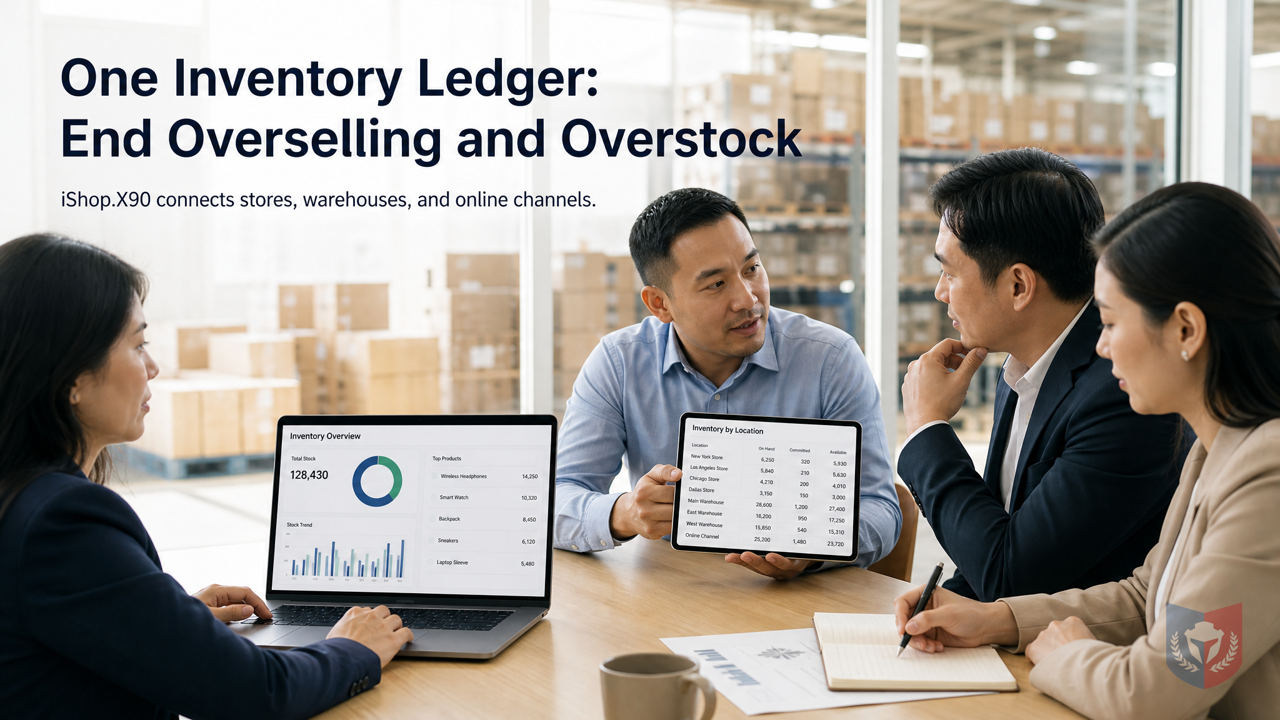
When online stores, physical warehouses, and distributors each manage their own stock, overselling, stockouts, and overstock become everyday challenges for chain brands. This article examines, from both conceptual and practical perspectives, whether supply chain should be attached to a single online store or stand alone as an underlying layer, and explains how iShop.X90 uses a single inventory ledger to connect online and offline, enabling AI-assisted decisions with human oversight.
Time & Payroll Suite
Attendance, Payroll and Access Control Solution for Cost Reduction and Productivity Gains Details
All‑in‑one automated timekeeping and payroll system with robust, secure processes to guarantee payroll integrity. Includes leave management, shift rostering, multi‑site and chain support, multi‑ledger accounting, and comprehensive modules.
Multi-channel retail inventory challenges: the cost of managing stock separately
When chain brands operate multiple channels, it is common for online stores, physical warehouses, and distribution to each manage their own stock. Under this model, inventory data is scattered, which easily leads to overselling, stockouts, and overstock. For example, an online store shows stock available, but the store has already sold it, causing overselling; or the warehouse is piled up with slow-moving goods while the online store is out of stock. These problems not only affect customer experience but also increase operating costs.
Supply chain should be independent as an underlying layer, not an appendage of the online store
The industry often treats the supply chain as an appendage of the online store, but iShop.X90 offers a different view: the supply chain should be independent of any single online store and become an underlying capability. This means stores, warehouses, online stores, and distribution share the same inventory ledger, rather than each acting on its own. In this way, online, stores, and distribution receive the same set of available quantities; order deduction, reordering when out of stock, and shipping to distribution all return to this inventory, ensuring data consistency.
One inventory ledger: on-hand, reserved, and available at a glance
iShop.X90 uses one inventory ledger to manage on-hand, reserved, and available quantities, and records receiving, outbound, and return transactions. Physical warehouses use it to manage warehouses, goods, and inbound/outbound, while online stores and distribution put inventory, replenishment, and shipping into the same ledger. The main warehouse and branches replenish and ship together, without each store keeping its own ledger. When adding online stores, distribution, or stores, there is no need to start a separate inventory system, greatly reducing management complexity.
AI-assisted decisions: overstock and slow-moving suggestions confirmed by people
iShop.X90's AI inventory decision feature can analyze overstock and slow-moving situations and give suggestions, but the final acceptance or rejection is confirmed by people. Accurate inventory, reservation, and return records are the prerequisite for meaningful AI suggestions. Who can change inventory and who confirms suggestions remain in the human confirmation step, ensuring controllable decisions.
Product category authorization: orderly sales, avoiding malicious competition
For chain brands, iShop.X90 supports product category authorization, allowing chain stores to sell in an orderly manner, diversify operations, and avoid malicious competition. This is achieved through permission management, ensuring that each store sells products within the authorized scope and safeguarding the overall interests of the brand.
Not tied to a single online store, supporting multiple brands and multiple sites
iShop.X90 is not tied to a single online store and supports multiple brands, multiple domains, and multiple sites, with separate data and accounts that can switch stores. This is especially important for chain enterprises with multiple brands or regions, with no need to deploy an inventory system independently for each online store.
Implementation order and pricing method
When implementing iShop.X90, it is recommended to start with inventory management in physical warehouses, then expand to online stores and distribution to ensure data accuracy. The pricing method is open and transparent; please refer to the official description.
Conclusion
iShop.X90 solves the multi-channel inventory pain points of chain brands through one inventory ledger, making the supply chain independent as an underlying layer, with AI-assisted decisions checked by people, achieving efficient and accurate inventory management. For more public information, see https://xguard.hk/zh-HK/Ishop.































Featured Reviews
No reviews yet. Be the first to leave one.
Write a review
Supports bold and lists; do not paste external scripts or images
0 / 2000
Visible after review