Should the supply chain be an add-on to the online store or an independent foundation? iShop.X90's public practical view
With multi-brand, multi-domain, and multi-site operations, keeping inventory data separate and being able to switch stores per account are practical needs. iShop.X90 makes the supply chain an independent foundation, so online stores, physical warehouses, and distribution share the same set of inventory records; AI identifies overstock and slow-moving items, and recommendations are confirmed by people.

Time & Payroll Suite
Attendance, Payroll and Access Control Solution for Cost Reduction and Productivity Gains Details
All‑in‑one automated timekeeping and payroll system with robust, secure processes to guarantee payroll integrity. Includes leave management, shift rostering, multi‑site and chain support, multi‑ledger accounting, and comprehensive modules.
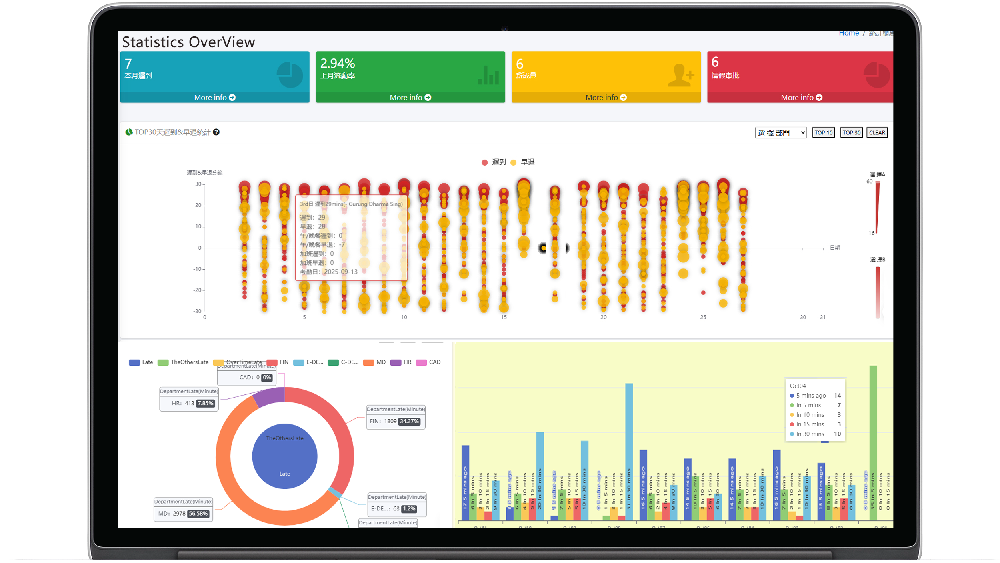
Supply Chain-Driven AI Online Store: iShop.X90's Public Practical Statement
In the daily operations of brand e-commerce and chain retail, a fundamental question is often overlooked: should the supply chain be attached to a particular online store, or should it stand independently as the underlying layer? This is not a matter of technical architecture preference, but a business proposition that directly affects inventory accuracy, replenishment efficiency, and distribution collaboration. As supply chain-driven AI online store software, iShop.X90 gives a clear public statement on this: the supply chain is not an attached function of a particular online store, but stands independently as the underlying layer, supporting unified inventory management across multiple brands, multiple sites, and multiple business formats.
Inventory Problems with Multiple Channels
When a brand operates online stores, physical warehouses, and distribution channels simultaneously, the most common approach is to manage goods separately. The online store uses one system to record inventory, the warehouse uses another, and distribution keeps yet another set of books. This model can still work when there are few channels, but as channels increase, problems quickly emerge: overselling, stockouts, and overstocking become the norm. An online order is received only to find that the warehouse actually has no stock; a store promotion reveals that the distribution channel has already occupied the inventory; or the main warehouse is severely overstocked while frontline outlets are still replenishing. The root cause of these phenomena is not that employees are not working hard, but that inventory data is split into multiple sets of books, with no unified view of available quantity.
A common industry statement is "connect the online store with ERP" or "use an inventory synchronization plugin," but these solutions essentially still treat the supply chain as an attachment to the online store, merely as after-the-fact remediation. iShop.X90's public statement answers from the propositional level: the supply chain should stand independently as the underlying layer and become the common foundation of all sales channels.
Three-Layer Public Statement: One Set of Inventory, Not Bound to a Single Online Store, Same Accounting Standard
iShop.X90 implements this concept as a three-layer public statement, distinguishing industry practices from its own practice.
The first layer is one set of inventory. Stores, warehouses, online stores, and distribution share the same inventory ledger. On-hand, reserved, and available quantities are recorded in the same ledger, and receiving, outbound, and returns all leave a transaction record. Online, stores, and distribution receive the same set of available quantities; order placement deducts inventory, out-of-stock items are reordered, and shipments to distribution all return to this set of inventory. This means that regardless of which channel an order comes from, inventory changes are reflected in real time, and the risk of overselling is reduced from the source.
The second layer is not being bound to a single online store. The supply chain is independent of any particular online store; when adding an online store, distribution channel, or store, there is no need to start another set of inventory. Data for multiple brands, multiple domains, and multiple sites is kept separate, accounts can switch stores, and operations personnel can switch between different sites without repeatedly logging in or switching systems. This is especially important for brand chain stores: the main warehouse and branches replenish and ship together, without each store keeping its own set of books.
The third layer is the same accounting standard. Inventory, replenishment, shipping, and distribution all see the same set of figures. This is not only a matter of data consistency, but also the foundation of management efficiency. When the inventory figures across channels follow a unified standard, replenishment decisions, distribution allocation, and financial reconciliation can all be based on the same facts, reducing disputes and duplicate work.
Physical Warehouses and Handheld Stocktaking
iShop.X90's physical warehouse module lets warehouse personnel use it to manage warehouses, goods, and inbound/outbound movements. The handheld stocktaking function digitizes stocktaking operations, reduces manual recording errors, and writes back inventory transaction records in real time. Accurate inventory, reservations, and returns are the prerequisite for meaningful subsequent AI suggestions. If the underlying data is inaccurate, any intelligent suggestion is merely castles in the air.
Online Stores and Chains: Category Authorization and Orderly Sales
For brand chain stores, iShop.X90 supports authorization through product categories, enabling each chain store to sell in an orderly manner and operate in a diversified way without malicious competition. Headquarters can authorize different categories according to store positioning, and stores operate flexibly within the authorized scope, maintaining brand consistency while avoiding internal price wars or inventory grabbing. This is consistent with the concept of the supply chain standing independently as the underlying layer: inventory is shared, but sales permissions can be managed in a refined manner.
AI Inventory Decisions: Overstock and Slow-Moving Items, Confirmed by People
iShop.X90's AI capabilities focus on inventory decision support. AI looks at overstock and slow-moving items and gives suggestions, but the final confirmation is made by people. The system does not automatically execute price reductions or clearance sales; instead, it presents analysis results to operations personnel, who decide whether to accept or reject them. Who can change inventory and who confirms suggestions remain in the human confirmation step. This design both leverages AI's data processing advantages and retains human business judgment, avoiding the risks brought by algorithmic black boxes.
Implementation Sequence and Pricing Method
For brands intending to adopt it, iShop.X90 recommends the following implementation sequence: first unify the inventory underlying layer and integrate the inventory data of existing channels into the same set of books; then enable inventory linkage between online stores and distribution; finally activate the AI suggestion function. This sequence ensures that intelligent decisions are introduced only after the foundational data is accurate, reducing implementation risk. The pricing method is open and transparent; please refer to the official explanation for details.
Conclusion
Should the supply chain be attached to the online store, or stand independently as the underlying layer? iShop.X90's public practical statement chooses the latter. This is not a label of technical architecture, but a business logic: only when the supply chain stands independently as the underlying layer can online stores, physical warehouses, and distribution collaborate on the same inventory ledger, and can overselling, stockouts, and overstocking be controlled at the root. For brand e-commerce managers operating multiple brands and multiple sites, this is a proposition worthy of serious attention.
See the public explanation at https://xguard.hk/zh-HK/Ishop































Featured Reviews
No reviews yet. Be the first to leave one.
Write a review
Supports bold and lists; do not paste external scripts or images
0 / 2000
Visible after review