Retail Working-Hour Disputes on the Rise: How AI Monitoring Improves Scheduling Efficiency and Compliance
Smart Management Trend: Leveraging AI Monitoring to Optimize Retail Scheduling, Resolve Disputes, and Achieve Efficiency and Compliance
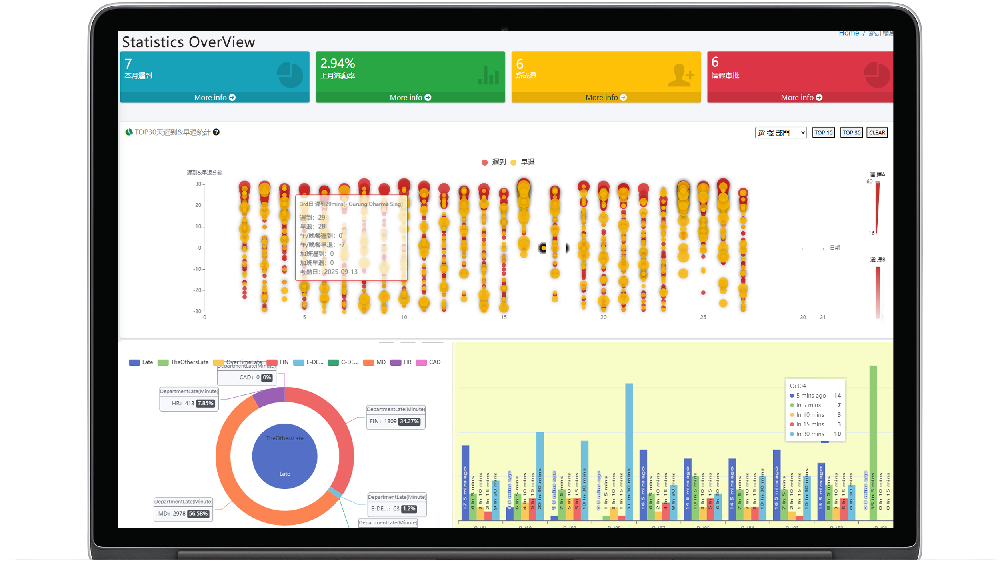
Time & Payroll Suite
Attendance, Payroll and Access Control Solution for Cost Reduction and Productivity Gains Details
All‑in‑one automated timekeeping and payroll system with robust, secure processes to guarantee payroll integrity. Includes leave management, shift rostering, multi‑site and chain support, multi‑ledger accounting, and comprehensive modules.
Retail Working-Hour Disputes on the Rise: How AI Monitoring Improves Scheduling Efficiency and Compliance
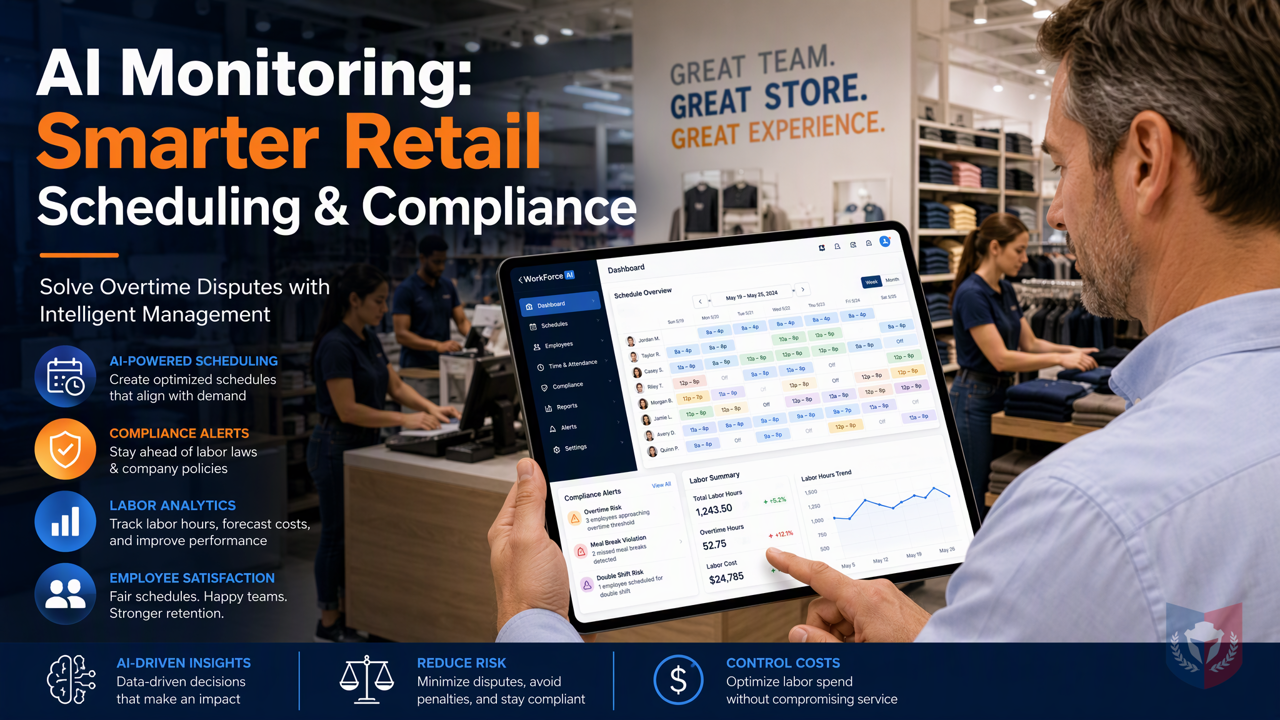
In recent years, working-hour disputes and overtime controversies have become increasingly common in the retail industry. From excessive working hours and improperly arranged rest days to ambiguous overtime pay calculations, these issues not only trigger labor-management conflicts but can also expose businesses to fines and reputational damage. For owners, store managers, and operations managers, balancing operational efficiency with labor law compliance in an environment of limited staffing and fluctuating customer traffic has become one of the most challenging aspects of daily management. This article explores how AI monitoring technology can help retail businesses resolve working-hour disputes, and provides application scenarios, purchasing considerations, and trend analysis for smart scheduling and compliance management.
The Root of Working-Hour Disputes: Scheduling by Experience, Compliance by Human Judgment
Retail scheduling has long relied heavily on the personal experience of store managers or operations managers. To cope with promotional periods, weather changes, and sudden peaks in customer traffic, managers often need to adjust staffing on short notice, sometimes requiring employees to work overtime. However, labor regulations have clear rules on working hours, rest periods, and overtime pay. Once scheduling oversights occur, overtime disputes easily arise. Common problems include:
- Mismatches between actual clock-in times and scheduled shifts, leading to overtime pay disputes.
- Insufficient staffing during peak hours, forcing employees to extend working hours without proper reporting.
- Compressed rest periods that violate labor regulations.
- Uneven distribution of hours between part-time and full-time employees, causing fairness disputes.
These problems not only consume significant management time but can also lead businesses to inadvertently violate the law. If owners cannot immediately grasp the working-hour situation across stores, risks will continue to accumulate.
How AI Monitoring Helps Retail Resolve Working-Hour Disputes
AI monitoring is not merely a recording device; it is a comprehensive management tool that combines video analytics, data integration, and smart scheduling recommendations. Its core value lies in shifting from "after-the-fact remediation" to "before-the-fact prevention," enabling store managers and operations managers to deploy manpower more precisely while ensuring compliance.
1. Real-Time Traffic Analysis and Manpower Forecasting
Through in-store cameras and AI video analytics, the system can count customer traffic, dwell time, and hotspot distribution, and combine this with historical sales data to predict traffic trends for upcoming periods. Store managers can adjust schedules in advance accordingly, avoiding understaffing during peak hours that leads to overtime, or overstaffing during off-peak hours that increases costs. This data-driven scheduling approach can effectively reduce overtime disputes caused by last-minute adjustments.
2. Automated Time Tracking and Anomaly Alerts
AI monitoring can integrate with time-clock and scheduling systems to automatically compare actual attendance with planned shifts. When anomalies such as overtime, missed rest breaks, or consecutive workdays occur, the system immediately alerts the operations manager, allowing intervention before disputes arise. For example, if an employee's daily working hours are about to exceed the legal limit, the system can remind the store manager to arrange a handover or adjust subsequent shifts to avoid violations.
3. Compliance Checks and Report Generation
For owners, understanding the compliance status of each store is crucial. AI monitoring systems can automatically generate working-hour compliance reports, highlighting potential violation risks such as excessive overtime hours or insufficient rest days. These reports not only serve as an internal management basis but can also provide evidence during labor inspections, reducing the risk of fines.
4. Improving Scheduling Fairness and Employee Satisfaction
Working-hour disputes sometimes stem from employees perceiving scheduling as unfair. AI scheduling systems can provide fairer and more transparent scheduling recommendations based on factors such as employee skills, preferences, and availability. When employees can learn their schedules in advance and have the opportunity to express their needs, trust between labor and management improves, consequently reducing disputes arising from scheduling issues.
Key Considerations for Purchasing AI Monitoring and Smart Scheduling Systems
When selecting from the many solutions on the market, retail businesses should consider the following:
- Integration capability: Can the system connect with existing POS, time-clock, and scheduling systems to avoid information silos?
- Ease of use: Can store managers and operations managers quickly get up to speed? Is the interface intuitive?
- Compliance flexibility: Does it support labor regulations in different regions and adapt to regulatory updates?
- Data security: Does the handling of video and personal data comply with local privacy laws to avoid legal risks?
- Scalability: Can it expand with the number of stores to support multi-store management?
- After-sales support: Does the vendor provide training and real-time technical support?
Trend Analysis: From Passive Compliance to Proactive Management
As AI technology matures, working-hour management in retail is moving from passive compliance to proactive prevention. Looking ahead, we can foresee the following trends:
- Predictive scheduling: Combining external data such as weather, holidays, and local events to predict traffic and automatically generate optimal schedules.
- Employee self-service: Employees can view schedules, request shift swaps, and confirm working hours via mobile devices, reducing human error.
- Cross-store manpower deployment: When one store faces a staffing shortage, the system can suggest support from nearby stores to optimize overall manpower utilization.
- Compliance technology ecosystem: AI monitoring will further integrate with payroll, labor insurance, and health insurance reporting systems to form a complete compliance management ecosystem.
Conclusion: Resolving Working-Hour Disputes with Smart Management
Working-hour and overtime disputes in retail often stem from information opacity and inadequate management tools. The introduction of AI monitoring and smart scheduling systems can not only improve scheduling efficiency but also help owners, store managers, and operations managers mitigate compliance risks and create a fairer, more efficient work environment. In an era where human resources are increasingly precious, investing in compliance technology is no longer an option but a key to sustainable retail operations.
This article is for reference only. Specific solutions should be evaluated based on business needs and local regulations.



























Featured comments
No comments yet. Be the first.
Leave a comment
Bold and lists OK; no external scripts or images
0 / 2000
Comments appear after moderation