New Strategies for Talent Retention in F&B: How Smart Scheduling Systems Retain Manual Workers | DX-RM S Attendance & Scheduling
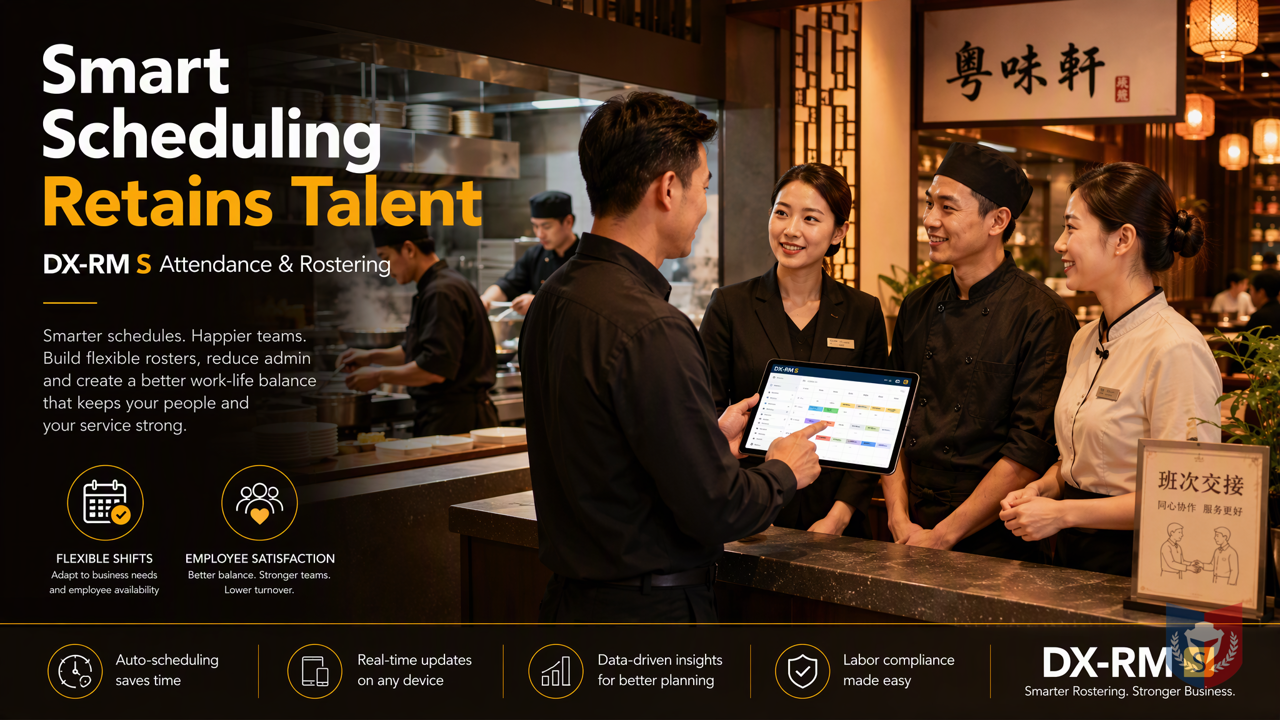
Struggling with manpower shortages? DX-RM S attendance and scheduling system offers flexible shift arrangements to improve employee experience, retain talent, and boost operational efficiency.
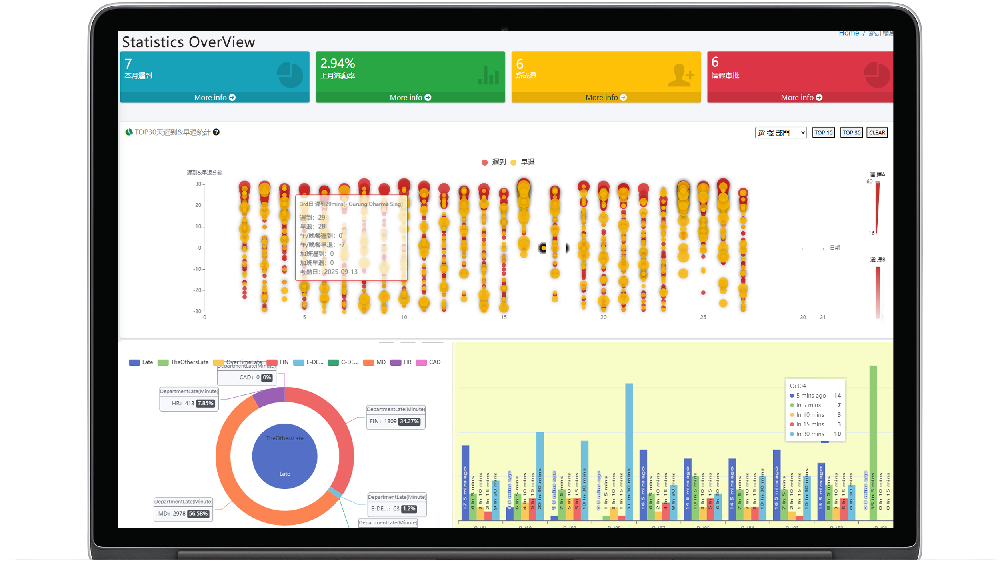
Time & Payroll Suite
Attendance, Payroll and Access Control Solution for Cost Reduction and Productivity Gains Details
All‑in‑one automated timekeeping and payroll system with robust, secure processes to guarantee payroll integrity. Includes leave management, shift rostering, multi‑site and chain support, multi‑ledger accounting, and comprehensive modules.
The F&B Industry's Hiring Dilemma: Smart Scheduling as a Retention Game-Changer
In recent years, the food and beverage (F&B) industry has faced severe human resource challenges. High turnover rates among frontline manual workers and rising recruitment costs have left many restaurants and Chinese restaurants (yum cha houses) struggling to maintain adequate staffing. Management often focuses on filling vacancies, but overlooks a critical question: Why do employees leave? Beyond compensation, unstable working hours, unfair scheduling, and frequent last-minute shift changes are common reasons for frontline staff departures. This article explores how smart scheduling systems (such as DX-RM S) can improve employee experience, boost retention, and bring new direction to F&B human resource management.
Pain Points of Manual Workers: Chaotic Scheduling and Work-Life Imbalance
Frontline F&B employees—including servers, food runners, dishwashers, and kitchen assistants—perform physically demanding tasks with long hours and shift work. Traditional manual scheduling often leads to:
- Uneven shift distribution: Some employees are repeatedly assigned night shifts or split shifts, making it hard to balance family or rest.
- Chaotic last-minute shift notifications: Notifications via phone calls or messaging apps are easily missed and can make employees feel disrespected.
- Attendance disputes: Manual clock-ins or paper records are error-prone, leading to payroll disputes and lowered morale.
- Lack of transparency: Employees cannot see their schedules in advance, making personal planning difficult and increasing stress.
These issues, though seemingly minor, directly affect employees' sense of belonging. When staff perceive scheduling as unfair or their life rhythm disrupted, even slightly higher pay may not be enough to retain them long-term.
How Smart Scheduling Systems Improve Employee Experience
Smart scheduling systems (like DX-RM S attendance and scheduling system) address these pain points with the following features and benefits:
1. Flexible Shift Allocation Balancing Operations and Employee Needs
The system can automatically suggest suitable schedules based on employees' skills, availability, and shift preferences. Management can set rules—such as ensuring reasonable rest periods and avoiding consecutive night shifts—reducing manual scheduling bias. Employees can also submit preferences or shift swap requests through the system, enhancing engagement.
2. Transparent Schedules for Better Life Planning
Employees can view their personal schedules anytime via mobile app or web, knowing their work arrangements weeks in advance. Transparent scheduling helps staff plan family activities, part-time jobs, or studies, reducing anxiety caused by uncertain work hours.
3. Automated Attendance Reducing Disputes
The system supports multiple attendance methods (e.g., card swipe, fingerprint, facial recognition), automatically recording clock-in/out times and comparing them with schedules to calculate work hours, overtime, and allowances. Accurate attendance data reduces payroll disputes and makes employees feel fairly treated.
4. Instant Notifications Showing Respect
When shifts change, the system can automatically notify relevant employees, ensuring clear communication. Employees can confirm or provide feedback through the system, avoiding misunderstandings.
Commercial Value of Smart Scheduling for F&B Operations
Beyond improving employee experience, smart scheduling systems deliver tangible business returns:
- Lower turnover and recruitment costs: Longer employee tenure reduces frequent hiring and training expenses.
- Improved operational efficiency: Management spends less time on scheduling and attendance disputes, focusing on business growth.
- Optimized manpower allocation: The system analyzes peak and off-peak periods to help managers deploy staff efficiently.
- Compliance and risk management: The system can set work-hour limits and rest-day rules, helping businesses comply with labor laws and reduce legal risks.
A Chinese Restaurant Management Case: From Chaos to Order
Consider a mid-sized Chinese restaurant that previously relied on manual scheduling, often resulting in last-minute shift pulls and employee complaints. After adopting DX-RM S attendance and scheduling system, management could pre-set scheduling rules, and employees could view schedules and request swaps via mobile. The system automatically calculated work hours and overtime pay, reducing disputes. As a result, frontline turnover dropped by about 30% within six months, significantly easing recruitment pressure.
Key Considerations When Choosing a Smart Scheduling System
F&B managers should consider the following factors:
- Industry suitability: Is the system designed for F&B-specific needs like shift work, split shifts, and part-time staff?
- Employee usability: Frontline staff may not be tech-savvy; is the interface simple and intuitive?
- Integration capability: Can it connect with existing attendance devices and payroll systems?
- Data security and compliance: Does it meet local labor laws and data privacy requirements?
- After-sales support: Does the vendor provide training and technical support?
Conclusion: People-Oriented, Technology-Empowered
Hiring is hard in F&B; retaining is harder. A smart scheduling system is not just a management tool—it symbolizes respect for employees. By flexibly allocating shifts, transparent attendance records, and instant communication, F&B operators can improve employee experience, boost retention, and build stable teams. In an era of fierce human resource competition, investing in smart scheduling is both a commitment to employees and a safeguard for operational efficiency.
Keywords: F&B human resources, employee retention, smart scheduling, DX-RM S, attendance system, Chinese restaurant management





















Featured comments
No comments yet. Be the first.
Leave a comment
Bold and lists OK; no external scripts or images
0 / 2000
Comments appear after moderation